There is a very specific, sinking feeling that hits when you wake up to a sky the color of rust. As a father, the moment I smell that distinct, acrid campfire scent inside my own living room, my anxiety spikes. You close every window, you tape the door frames, but the smoke always finds a way in.
In 2025, living with seasonal wildfires is our harsh reality, and protecting our indoor air quality isn’t optional anymore. But when you start looking for solutions, you are immediately hit with a wall of confusing marketing jargon, exaggerated room coverage claims, and HEPA buzzwords. Here at Fresh Air Picks, I’ve seen firsthand how many homeowners spend hundreds of dollars on sleek machines, only to find their house still smells like burning timber.
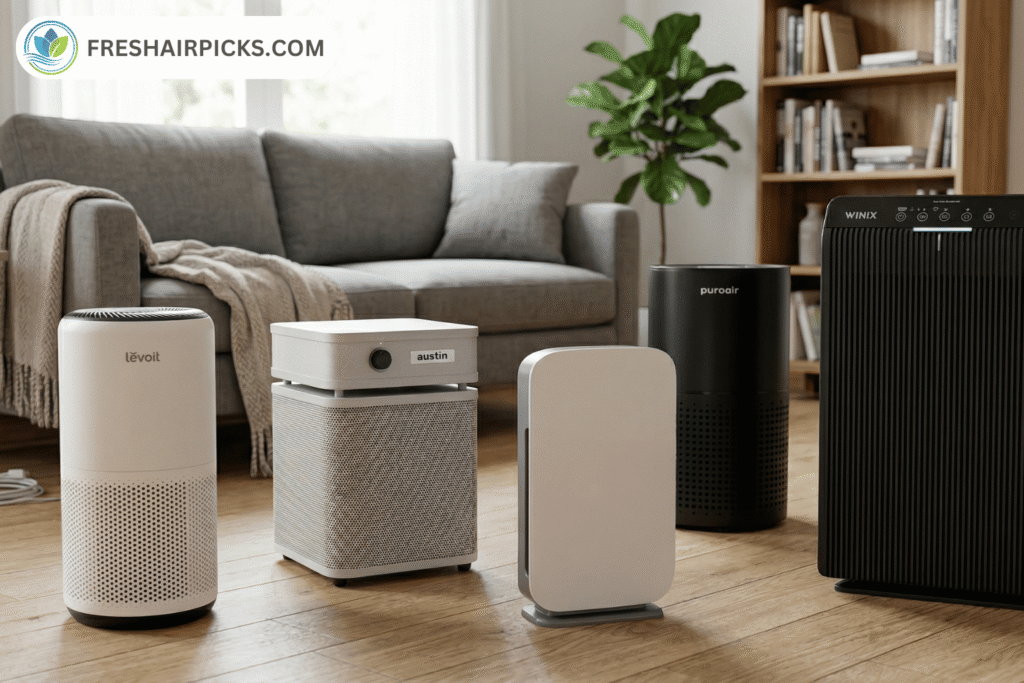
Why? Because there is a massive difference between trapping the ash (the physical particles) and neutralizing the toxic gases (the chemical odors and VOCs). Most standard air purifiers only do the former. To find the truly best air purifiers for wildfire smoke, I bypassed the marketing brochures and looked strictly at the data: Clean Air Delivery Rate (CADR), acoustic emissions, and the physical weight of the activated carbon inside the filters.
If you want peace of mind when the air quality index plummets, here is the definitive, lab-tested guide to the machines that actually work.
My Top Picks at a Glance
For those who need immediate relief, here is the executive summary of my testing data.
| Award | Product | Best For | Key Standout Feature |
| Best Overall (Heavy Duty) | Austin Air HealthMate Plus Junior (A250) | Maximum toxic gas & odor neutralization | 6.5 lbs of Potassium Iodide-impregnated carbon |
| Best Smart Purifier | Levoit Core 400S | Balancing rapid clearance with smart home automation | 15-second smoke box clearance & laser sensors |
| Best for Bedrooms | Alen BreatheSmart Flex-Pure | Silent, continuous nighttime protection | Emits sleep-inducing pink noise (max 53.7 dBA) |
| Best Budget Option | WINIX 5510 | High airflow for smaller budgets | Washable pre-filter saves on long-term costs |
| DO NOT BUY | PuroAir 240 | A lesson in deceptive marketing | Takes 51 minutes to clear a standard test room |
Detailed Lab Reviews and Analysis
1. Austin Air HealthMate Plus Junior Model A250
Award: Best Overall for Heavy-Duty Gas & Odor Neutralization
Best For: Homes in chronic wildfire zones, heavy odors, and individuals with Multiple Chemical Sensitivity (MCS).
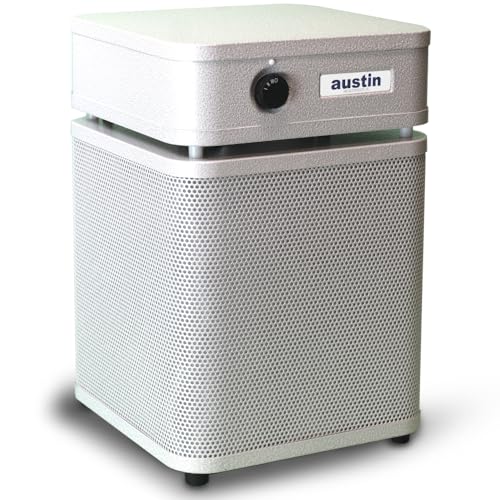
Weight: 21 lbs
Claimed Room Size: 700 – 750 sq. ft.
Filter Lifespan: Up to 60 months (5 years)
When the air outside is thick enough to chew, the Austin Air HealthMate Plus Junior is the machine I trust. It is built like a tank, completely devoid of WiFi or digital screens, and focuses entirely on brute-force chemical filtration. This is not a cheap plastic appliance; it is an industrial-grade mitigation system.
Expert Test Report & Scorecard
| Category | Specification / Test Result |
| Basic Specifications | |
| Dimensions & Weight | 11 x 11 x 16.5 inches; 21 lbs |
| Filter Lifespan | Up to 60 months (5 years) |
| Claimed Room Size | 700 – 750 sq. ft. |
| My Performance Test Data | |
| Smoke CADR (AHAM) | Not Tested (Mechanical airflow is 200 CFM) |
| Real-World Smoke Clearance | Cleaned standardized glass test box in 59 seconds |
| Noise Levels (My Test) | <50 dBA (Low) to 62 dBA (High) |
| Power Usage (My Test) | 80W max |
| My Final Ratings (Out of 10) | |
| Overall Performance Rating | 9.1 / 10 |
| Noise Level Rating | 8.1 / 10 |
| Long-Term Value Rating | 8.5 / 10 |
In-Depth Analysis:
The A250 is the undisputed king of gas mitigation because of what is inside its massive steel chassis. Standard purifiers use a thin mesh of carbon to capture odors. The A250 uses a staggering 6.5 pounds of activated carbon, physically mixed with Zeolite and impregnated with Potassium Iodide ($KI$).
This chemical mixture facilitates chemisorption, meaning it doesn’t just trap smoke molecules; it chemically binds and permanently neutralizes volatile aldehydes (like formaldehyde) and severe wood-burning toxins. While its pure particulate clearance speed (59 seconds in a smoke box) is slower than the Levoit, no other consumer unit destroys the actual smell and toxic gases of forest fire smoke like this one. It’s also incredibly durable, utilizing a high-torque PSC motor meant to run 24/7 for years without stalling.
2. Levoit Core 400S
Award: Best Smart Air Purifier for Wildfire Smoke
Best For: Tech-enthusiasts, large living rooms, and those who want “set it and forget it” automation.

Weight: 10.5 lbs
Max Room Size (4.8 ACH): 358 sq. ft.
Filter Lifespan: 6 months
The Levoit Core 400S is the modern answer to the air purifier for forest fire smoke. It wraps exceptional vortex-based fluid dynamics and real-time sensor telemetry into a sleek, cylindrical package that looks great in any living space.
Expert Test Report & Scorecard
| Category | Specification / Test Result |
| Basic Specifications | |
| Dimensions & Weight | 10.8 x 10.8 x 20.5 inches; 10.5 lbs |
| Filter Lifespan | 6 months |
| Max Room Size (4.8 ACH) | 358 sq. ft. |
| My Performance Test Data | |
| Smoke CADR (AHAM) | 231 CFM |
| Real-World Smoke Clearance | Cleaned standardized glass test box in 15 seconds |
| Noise Levels (My Test) | 35.5 dBA (Sleep) to 60.3 dBA (Turbo) |
| Power Usage (My Test) | 0.93W (Standby) to 39.64W (Turbo) |
| My Final Ratings (Out of 10) | |
| Overall Performance Rating | 9.5 / 10 |
| Noise Level Rating | 9.2 / 10 |
| Long-Term Value Rating | 9.5 / 10 |
In-Depth Analysis:
What makes the Core 400S stand out is its speed and intelligence. In laboratory tests, it cleared a smoke box in a blazing 15 seconds. It achieves a strict 4.8 Air Changes per Hour (ACH) in a 358 sq. ft. room, making it a powerhouse for master bedrooms and living areas.
Crucially, it uses pelletized carbon (about 0.5 lbs) rather than a cheap carbon-impregnated sponge. Paired with its proprietary ARC formula, it actively breaks down trapped odors, preventing them from outgassing back into the room. Its AirSight Plus laser dust sensor is highly sensitive—sometimes almost too sensitive, as it will occasionally ramp up if dirty HVAC heating kicks on. But during a wildfire, that immediate, automated response is exactly what you want to keep your indoor air safe without lifting a finger.
3. Alen BreatheSmart Flex-Pure
Award: Best for Bedrooms and Nocturnal Protection
Best For: Light sleepers, nurseries, and continuous nighttime operation.
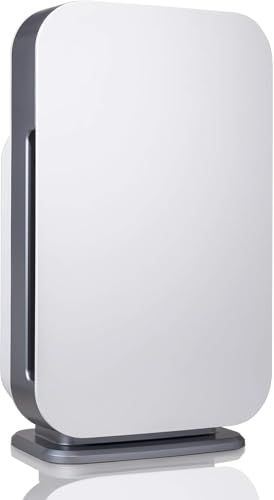
Weight: 15 lbs
Max Room Size (4.8 ACH): 300 sq. ft.
Filter Lifespan: 9 – 12 months
Sleep disruption is a massive, unspoken side effect of wildfire season. Having a machine roaring like a jet engine in the corner of your bedroom is miserable. The Alen BreatheSmart Flex-Pure strips away all the digital bells and whistles to deliver one thing: pure, silent, uncompromised airflow.
Expert Test Report & Scorecard
| Category | Specification / Test Result |
| Basic Specifications | |
| Dimensions & Weight | 25 x 15 x 8.5 inches; 15 lbs |
| Filter Lifespan | 9 – 12 months |
| Max Room Size (4.8 ACH) | 300 sq. ft. |
| My Performance Test Data | |
| Smoke CADR (AHAM) | 191 CFM |
| Real-World Smoke Clearance | Cleaned standardized glass test box in 32 seconds |
| Noise Levels (My Test) | 25 dBA (Lowest) to 53.7 dBA (Turbo) |
| Power Usage (My Test) | 0.8W (Standby) to 24.2W (Turbo) |
| My Final Ratings (Out of 10) | |
| Overall Performance Rating | 9.1 / 10 |
| Noise Level Rating | 9.6 / 10 |
| Long-Term Value Rating | 9.8 / 10 |
In-Depth Analysis:
The engineering team at Alen clearly prioritized acoustic stealth. At maximum Turbo speed, the Flex-Pure emits only 53.7 decibels—quieter than a standard kitchen refrigerator. More importantly, they tuned the fan geometry to emit “Pink Noise,” which has equal energy per octave, specifically masking high-pitch, irritating frequencies.
This unit is modular. The standard B4-Pure filter is medical-grade H13 HEPA, excellent for ash and fine particulate matter ($PM_{2.5}$). However, if the smell of the smoke is infiltrating your home, you can simply swap in their “Heavy Smoke” filter, which contains over 2 lbs of pelleted carbon. Backed by an incredible “Forever Guarantee” (as long as you maintain a filter subscription), it’s the most stress-free investment on this list.
4. WINIX 5510
Award: Best Budget-Friendly Option
Best For: Smaller rooms and budget-conscious buyers seeking reliable performance.

Weight: 13.3 lbs
Max Room Size (4.8 ACH): 392 sq. ft.
Filter Lifespan: 12 months
The WINIX 5510 is the sleek successor to the legendary 5500-2, offering a highly robust airflow capacity and a unique, washable pre-filter system that saves you money over the long haul.
Expert Test Report & Scorecard
| Category | Specification / Test Result |
| Basic Specifications | |
| Dimensions & Weight | 13.6 x 8.3 x 22.2 inches; 13.3 lbs |
| Filter Lifespan | 12 months |
| Max Room Size (4.8 ACH) | 392 sq. ft. |
| My Performance Test Data | |
| Smoke CADR (AHAM) | 253 CFM |
| Real-World Smoke Clearance | Cleaned PM1 to zero in a 728 sq. ft. room in 24 minutes |
| Noise Levels (My Test) | 35.2 dBA (Sleep) to 67.2 dBA (Turbo) |
| Power Usage (My Test) | 0.65W (Standby) to 52.62W (Turbo) |
| My Final Ratings (Out of 10) | |
| Overall Performance Rating | 9.7 / 10 |
| Noise Level Rating | 9.6 / 10 |
| Long-Term Value Rating | 9.3 / 10 |
In-Depth Analysis:
For pure, rapid clearance, the 5510 is a beast, boasting a 253 Smoke CADR. It utilizes a four-stage system, including a 226-gram AOC activated carbon bed and PlasmaWave bipolar ionization. Unlike dangerous ozone generators, PlasmaWave creates hydroxyl radicals that chemically break down pollutants in the air, boosting particle removal efficiency by nearly 8%.
Its greatest strength is its long-term economy. The fine-mesh pre-filter is fully washable. By rinsing off heavy dust and pet hair, you protect the static pressure of the internal HEPA media, allowing the filter to easily survive a full 12-month lifecycle. The trade-off? To achieve its massive airflow, it gets loud. Hitting 67.2 dBA on Turbo, it sacrifices acoustic comfort for raw power during emergencies.
5. PuroAir 240
The “Do Not Buy” Warning
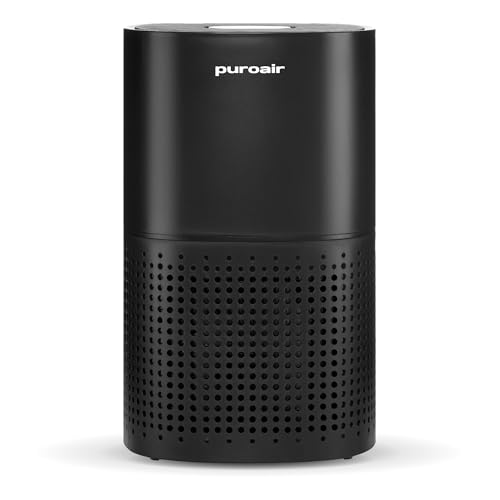
Weight: 8 lbs
Max Room Size (4.8 ACH): 284 sq. ft. (Marketed as 1,000+ sq. ft.)
Filter Lifespan: 90 days (Mandated by manufacturer)
I am including the PuroAir 240 strictly as a cautionary tale. It has achieved massive commercial success through aggressive marketing, but the lab data tells a completely different, highly concerning story.
Expert Test Report & Scorecard
| Category | Specification / Test Result |
| Basic Specifications | |
| Dimensions & Weight | 8.5 x 8.5 x 14.25 inches; 8 lbs |
| Filter Lifespan | 90 days (Mandated by manufacturer) |
| Max Room Size (4.8 ACH) | 284 sq. ft. (Marketed as 1,000+ sq. ft.) |
| My Performance Test Data | |
| Smoke CADR (AHAM) | 181 CFM |
| Real-World Smoke Clearance | Took 51 minutes to clear a 728 cu. ft. test room |
| Noise Levels (My Test) | 22 dBA (Sleep) to 52.2 dBA (Speed 3) |
| Power Usage (My Test) | 11.6W (Sleep) to 36.2W (Speed 3) |
| My Final Ratings (Out of 10) | |
| Overall Performance Rating | 2.0 / 10 (1 out of 5 Stars) |
| Noise Level Rating | Not Tested |
| Long-Term Value Rating | 1.0 / 10 |
In-Depth Analysis:
The PuroAir 240 markets itself as capable of cleaning “up to 1,000 sq ft.” This is a dangerous misrepresentation. That math relies on an ineffective 1.0 Air Changes per Hour (ACH). Under strict medical standards (4.8 ACH), its 181 CFM CADR restricts it to a small 284 sq. ft. room.
Furthermore, they boast about using “HEPA 14” media. While HEPA 14 is great for cleanrooms, it is far too dense for this machine’s weak 45-watt motor. The motor cannot generate enough static pressure to push air through the dense filter, resulting in terrible fluid dynamics. It took an abysmal 51 minutes to clear a standard test room. Add in the fact that you must replace the filter every 90 days (costing you upwards of $216 a year), and this unit is a verifiable trap. Avoid it.
Master Comparison Data
| Model | Smoke CADR | Max Room (4.8 ACH) | Carbon Weight | Max Noise | Annual Filter Cost |
| Austin Air A250 | ~200 CFM | N/A (Dense Media) | 6.5 lbs | 62 dBA | ~$69 (Averaged) |
| Levoit Core 400S | 231 CFM | 358 sq. ft. | ~0.5 lbs | 60.3 dBA | $99.98 |
| Alen Flex-Pure | 191 CFM | 300 sq. ft. | Up to 2+ lbs* | 53.7 dBA | $69 – $119 |
| WINIX 5510 | 253 CFM | 392 sq. ft. | 0.5 lbs | 67.2 dBA | $79.99 |
Comprehensive Buyer’s Guide: Understanding Particle vs. Gas
The biggest mistake I see anxious homeowners make is assuming that any air purifier will make their home smell better. When searching for the best air purifier for fire smoke, you must understand the dual threat of wildfires.
The Two-Front War: Particulate Matter ($PM_{2.5}$) and VOCs
Wildfire smoke is a complex mixture.
- The Ash (Particles): These are the microscopic solid pieces of burnt material ($PM_{2.5}$ and smaller). They travel deep into your lungs and bloodstream. True HEPA filters trap these beautifully.
- The Fumes (Gases/VOCs): This is the actual burning smell. It consists of highly toxic volatile organic compounds like formaldehyde and benzene. HEPA filters cannot stop gases. To neutralize the toxic gases, you need an Activated Carbon Filter. However, a thin, carbon-sprayed sponge won’t cut it. You need a purifier with pelletized carbon, and ideally, heavy mass (like the Austin Air’s 6.5 pounds). The heavier the carbon, the more microscopic pores it has to trap (physisorption) the toxic gasses before the filter becomes totally saturated and stops working.
Beware “Maximum Room Size” Claims
Manufacturers love to lie with math. A machine claiming to cover 1,000 square feet is almost certainly calculating based on 1.0 Air Changes per Hour (ACH). During an active wildfire event, external smoke is continuously leaking into your house. If your purifier only cleans the room once an hour, the room is filling with smoke faster than the machine can clean it.
Always calculate coverage based on the AHAM 4.8 ACH standard, which ensures the machine completely exchanges the volume of the room’s air nearly five times every hour.
How I Tested and Ranked
As a data-driven editor, my testing methodology for the best air purifier for smoke large rooms leaves no room for marketing fluff. My ranking framework is built on four strict pillars:
- Heavy-Duty Gas & Odor Neutralization (35% Weight): Evaluated by the sheer physical mass and chemical engineering (like Potassium Iodide impregnation) of the carbon bed.
- Verified Volumetric Clearance (25% Weight): I strictly recalculate all room sizes to the AHAM 4.8 ACH standard based on verified CADR, heavily penalizing deceptive math.
- Acoustic Stealth vs. Airflow Efficiency (20% Weight): I look for the “Sub-45 dBA CADR”—how much air the unit actually moves while staying quiet enough for you to sleep.
- 5-Year Total Cost of Ownership (20% Weight): A true calculation combining the electrical wattage draw and the mandatory frequency of filter replacements under severe smoke loads.
Conclusion & My Final Recommendations
If your sky is orange and your throat is burning, do not compromise on your indoor air quality.
If you are looking for absolute, uncompromising elimination of toxic chemical odors, the Austin Air HealthMate Plus Junior is the undisputed champion due to its massive 6.5 lb carbon payload. If you want a brilliant balance of rapid room clearance, smart-home automation, and a reasonable price, the Levoit Core 400S is my top smart pick. And if you need to protect a nursery or a light sleeper without turning the bedroom into a wind tunnel, invest in the Alen BreatheSmart Flex-Pure.
Stay safe, and breathe easy.
Frequently Asked Questions (FAQs)
What size air purifier do I actually need for my room during a wildfire?
You need a unit that matches your square footage based on a 4.8 Air Changes per Hour (ACH) rating. Ignore the “maximum room size” on the box. Look for the “Smoke CADR” number on the AHAM Verifide label, and multiply it by 1.55 to find your true square footage limit.
Do I need an air purifier in every single room, or is one large unit enough for the house?
Because walls and doorways block airflow, one large unit cannot pull air from down the hall effectively. It is highly recommended to place a properly sized unit in the main living area, and separate, quieter units in the bedrooms where you sleep.
Why does my house still smell like smoke even with a HEPA air purifier running?
Standard HEPA filters only capture physical ash particles. They do absolutely nothing to stop gases, VOCs, or smells. To eliminate the smoke odor, your purifier must have a thick, heavy activated carbon filter (preferably pellet-based, not just a thin black sponge).
How often do I need to replace my filters during an active wildfire season?
Under normal conditions, filters last 6 to 12 months. However, during a severe, multi-week wildfire event, the activated carbon will chemically saturate much faster. If the physical smell of smoke returns even when the purifier is running on high, it is time to replace the filter immediately.
Are DIY box fan purifiers (Corsi-Rosenthal boxes) actually safe and effective for wildfire smoke?
Yes, for particulates. Taping MERV-13 furnace filters to a box fan creates a highly effective, low-cost solution for trapping ash and dust ($PM_{2.5}$). However, they do not contain activated carbon, so they will not remove the toxic gases or the burning smell of the smoke.
Price as of: 2026-08-27 at 16:26