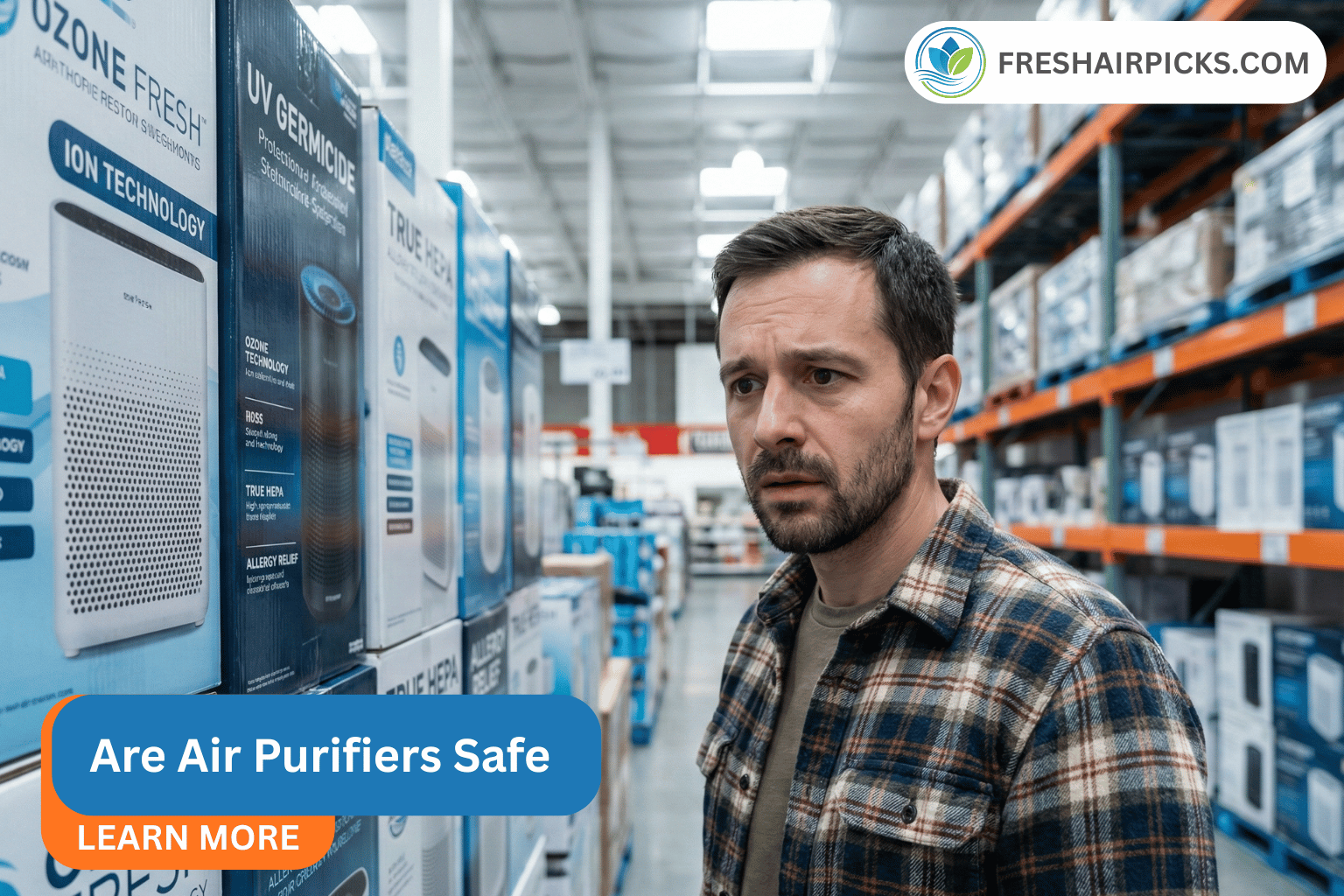
When I first started researching air quality for my own home, I felt the exact same anxiety you’re feeling right now. You’re trying to solve a health problem—maybe it’s your child’s asthma or persistent wildfire smoke—and suddenly you read that the very machine you’re buying might be spitting out a toxic gas. It feels like a betrayal.
So, let’s cut through the marketing noise and get straight to the answer. Do air purifiers produce ozone?
The answer is: It depends entirely on the technology inside the box.
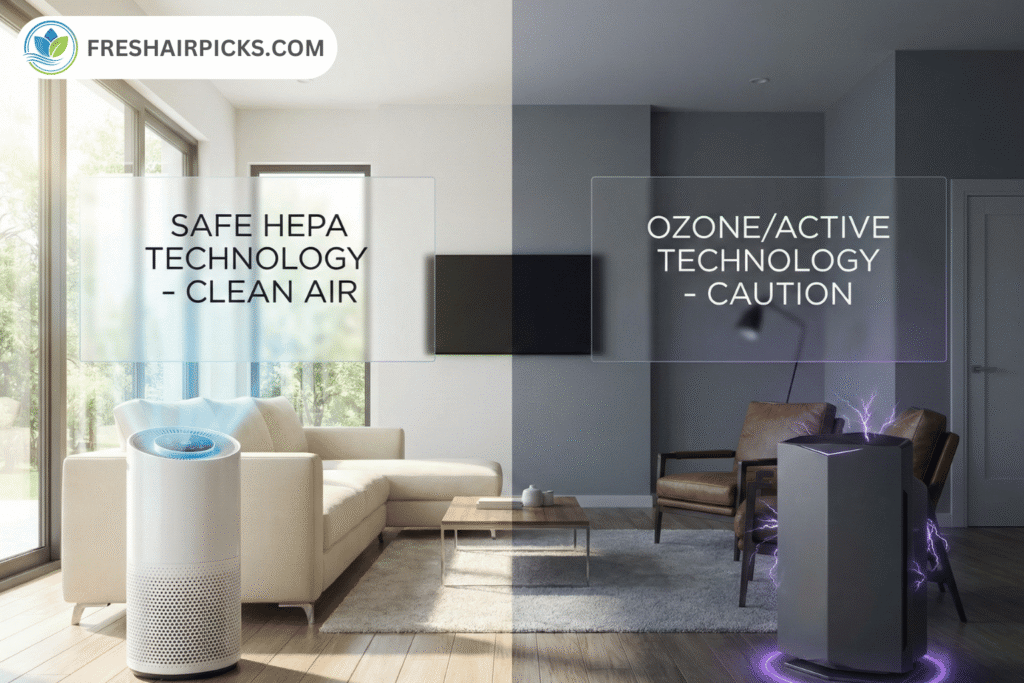
- True HEPA (Mechanical) Air Purifiers: No. These are strictly passive devices. They do not produce ozone.
- Ionizers, Electrostatic Precipitators (ESPs), and Ozone Generators: Yes. These devices use electricity to alter the chemistry of the air, creating ozone either as a primary goal or a byproduct of the “zapping” process.
While ozone is vital in the upper atmosphere (Earth’s sunscreen), the EPA has a catchy phrase for it at ground level: “Good Up High, Bad Nearby.” In your living room, ozone is a lung irritant—essentially a “sunburn” for your respiratory system.
This guide is designed to help you act like an engineer. I’ll show you how to identify which type of device you have, decode the sneaky marketing terms used to hide ozone emissions, and find units certified as completely safe.
Key Takeaways
- Not All Purifiers Are the Same: Mechanical filtration (HEPA) is safe and ozone-free. Electronic air cleaning (Ionizers/Plasma) often emits ozone.
- The “Fresh” Smell is a Warning: If your air purifier smells like “wet pavement” or chlorine, it is producing ozone.
- Ignore “Energy Star”: Energy Star certification allows up to 50 ppb of ozone. For true safety, you must look for UL 2998 validation (Zero Ozone).
- Marketing Trap: Watch out for terms like “Activated Oxygen,” “Energized Air,” or “Hydroxyls.” These are often euphemisms for ozone-generating tech.
The Great Divide: Mechanical vs. Electronic Air Cleaning
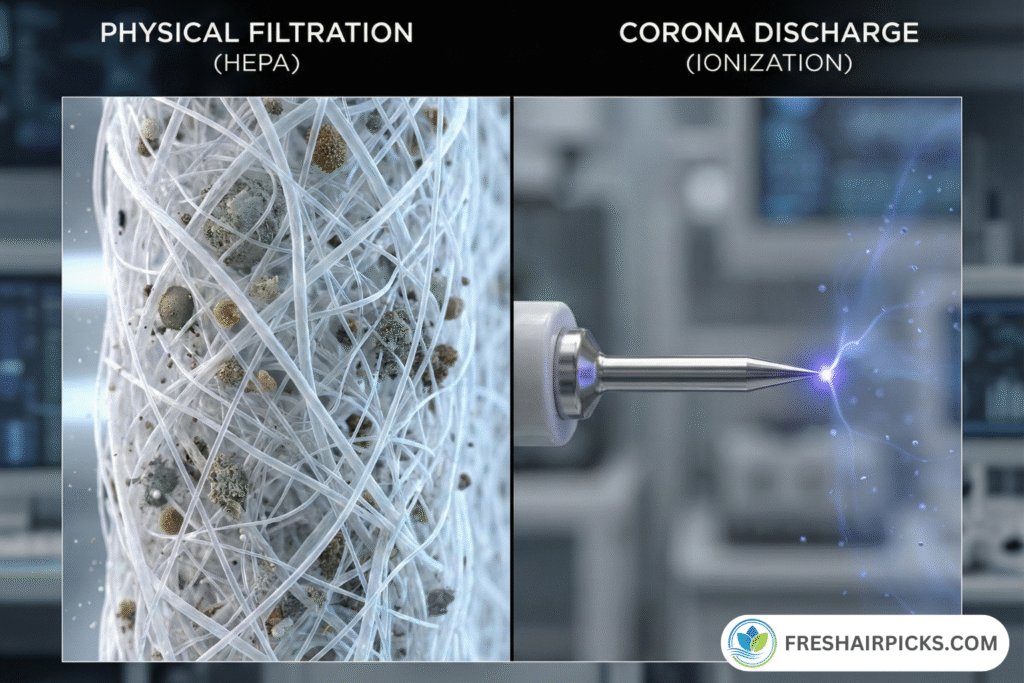
To understand the safety risks, we have to stop looking at “Air Purifiers” as one big category. In 2025, the market is split into two distinct camps: the “Passive” protectors and the “Active” reactors.
Passive Filtration (The Safe Standard)
Think of a mechanical air purifier like a vacuum cleaner for the air. It uses a fan to pull dirty air in and forces it through a dense physical sieve—usually a True HEPA filter for particles and Activated Carbon for odors.
This process is purely physical. The machine captures dust, pollen, and smoke particles by trapping them in the fibers.
- The Chemistry: There are no chemical changes involved. No electrons are fired into the air. No molecular bonds are broken.
- The Verdict: Because they are chemically inert, mechanical filtration devices are 100% ozone-free. This is why organizations like the CDC and ASHRAE overwhelmingly recommend this technology for safe infection control and allergy management.
Active Electronic Cleaning (The Hidden Risk)
This category includes ionizers, electrostatic precipitators (ESPs), plasma generators, and PCO (Photocatalytic Oxidation) units.
Instead of a vacuum, think of these devices as a miniature lightning storm inside a box. They use high-voltage electricity to charge (ionize) particles so they stick to walls or plates, or they attempt to destroy pollutants chemically.
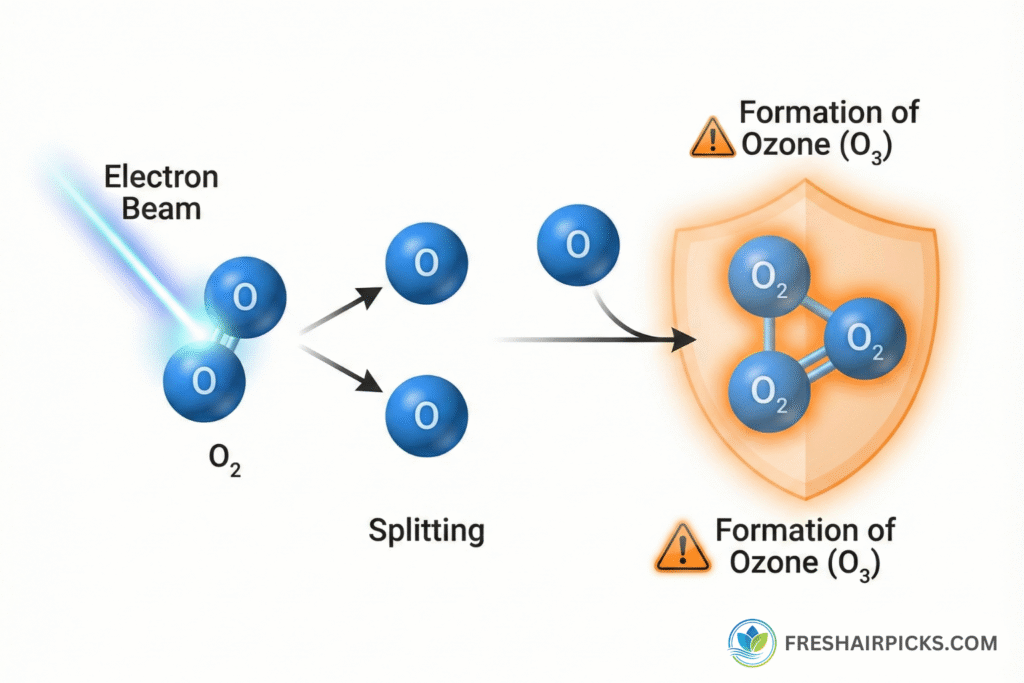
- The Side Effect: When you zap the air with high voltage, you often split oxygen molecules ($O_2$). These split atoms instantly recombine to form Ozone ($O_3$).
- The Verdict: These devices inherently carry the risk of ozone production. While some modern versions produce very low amounts, others (especially older or cheaper models) can exceed safe limits.
The Science: How Do Air Purifiers Create Ozone?
You don’t need a PhD in chemistry to understand this, but knowing the “how” will help you spot dangerous devices that try to hide behind fancy jargon.
Corona Discharge & The Electron Avalanche
Most ozone-producing air purifiers use a mechanism called Corona Discharge. If you look inside an ionizer or ESP, you will often see a sharp needle or a thin wire.
Here is the step-by-step process of what happens when you turn it on:
- High Voltage: The device applies thousands of volts to that sharp needle.
- The Avalanche: This creates a powerful electric field that strips electrons off air molecules.
- The Fracture: These high-speed electrons smash into oxygen molecules ($O_2$) with enough force to break them apart.
- Ozone Formation: The free oxygen atoms ($O$) latch onto other oxygen molecules ($O_2$) to form Ozone ($O_3$).
This isn’t a malfunction; it is a law of physics. Unless the manufacturer adds an expensive catalyst to destroy the ozone before it leaves the machine, it enters your room.
The “Secondary Pollution” Trap (Terpenes)
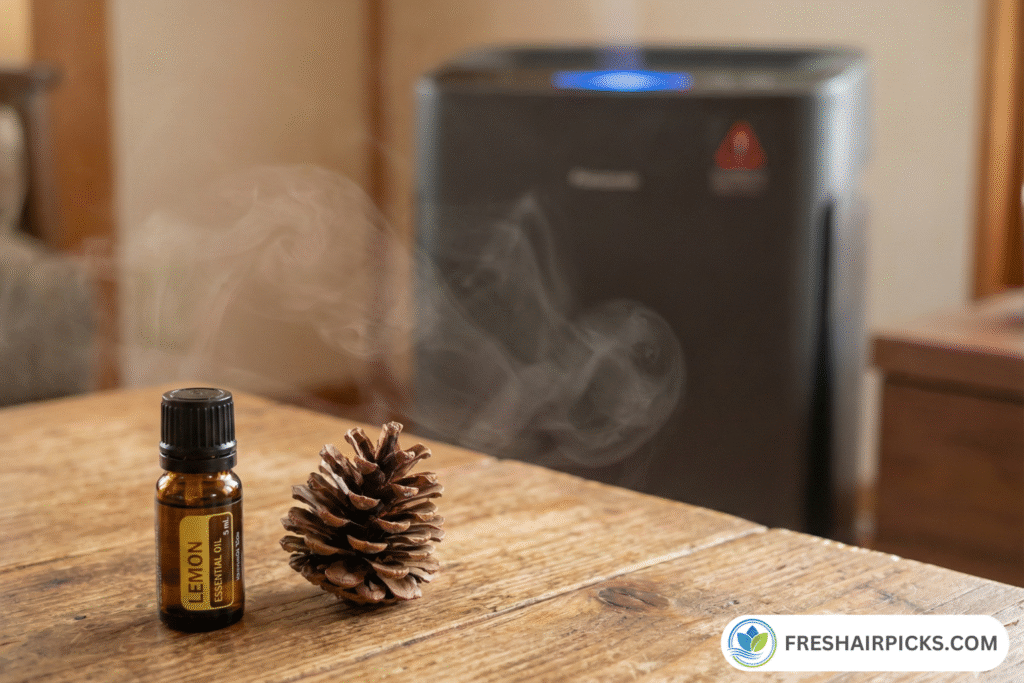
This is a critical insight that many fact sheets miss. Even if an air purifier produces a “safe” amount of ozone (e.g., 30 parts per billion), it can still be dangerous if you have a clean-smelling home.
If you use lemon or pine-scented cleaning products, essential oils, or air fresheners, your air contains chemicals called Terpenes.
- The Reaction: Ozone reacts aggressively with terpenes.
- The Result: This reaction creates Formaldehyde (a known carcinogen) and Ultrafine Particles.
Research has shown that using an ozone-emitting device in a room with air fresheners can actually increase the total pollution in the room. This defeats the entire purpose of buying an air purifier.
Risk Assessment: How to Tell if YOUR Air Purifier Emits Ozone
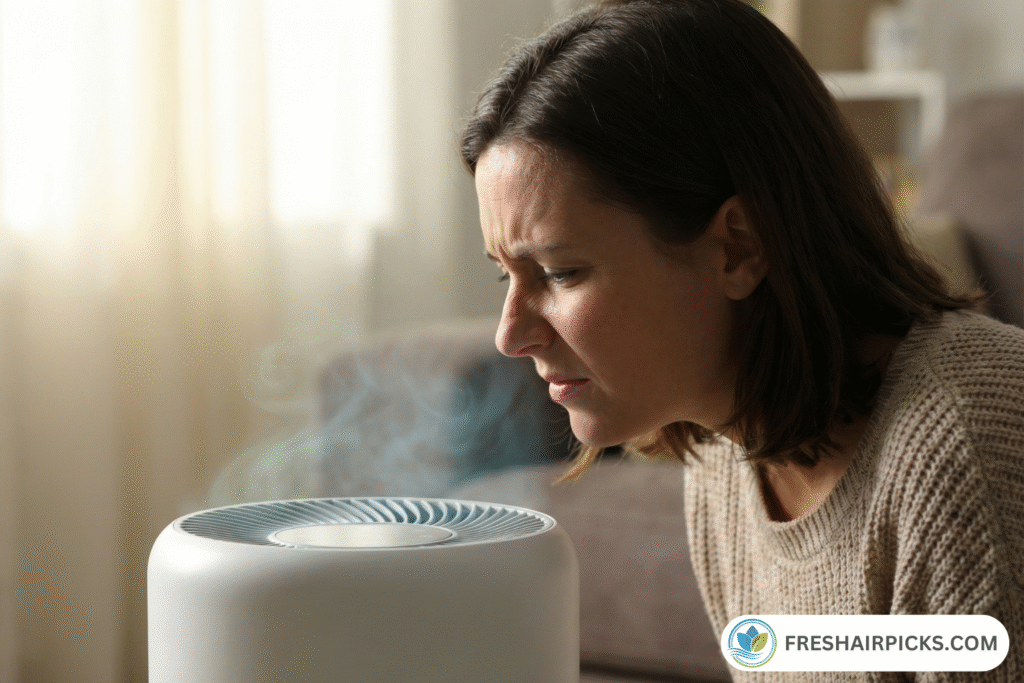
Many of you are reading this while looking sideways at the machine humming in your corner. You might be searching for specifics like “does levoit air purifier emit ozone” or “does shark air purifier emit ozone.” Here is how to audit your specific device right now.
The “Smell Test” & Physical Clues
Your nose is a surprisingly sensitive tool for detecting ozone, often picking it up at concentrations as low as 0.02 ppm.
- Scent: Does the air coming out of the machine smell like wet pavement, chlorine bleach, or the sharp scent of a thunderstorm? That is ozone.
- Sound: Do you hear a faint “crackling,” “hissing,” or “snapping” sound? That is usually the sound of static discharge on collection plates, a hallmark of ozone-producing tech.
- Visuals: Does the marketing claim “No Filters to Replace” or feature “Washable Collection Plates”? These are almost always Electrostatic Precipitators (ESPs), which are high-risk for ozone.
Decoding Marketing Euphemisms (The “Forbidden Words” List)
Manufacturers know that “Ozone” is a scary word. To get around this, they use synonyms that sound scientific or natural. If you see these terms on the box, the device likely produces ozone:
| “Activated Oxygen” | Ozone ($O_3$). It’s a direct synonym. |
| “Super Oxygen” | Ozone ($O_3$). |
| “Energized Air” | Usually refers to Ionization, which produces ozone byproducts. |
| “Trivalent Oxygen” | The chemical name for Ozone ($O_3$). |
| “Plasma” / “Hydroxyls” | High-energy active purification that often generates ozone as an intermediate step. |
| “Nature’s Air Cleaner” | A common tagline for ozone generators implying natural safety. |
Health Risks: Why the EPA & CARB Say “No”
The EPA’s stance is clear: “Good Up High, Bad Nearby.”
The EPA & CARB Warning
The California Air Resources Board (CARB) and the EPA have taken a hard line against ozone generators. They state that for ozone to be effective at killing bacteria or mold in the air, it must be present at concentrations that are dangerous to human life.
At safe levels (below 0.05 ppm), ozone has “little potential to remove indoor air contaminants.” Essentially, the technology is flawed: it is either safe and ineffective, or effective and dangerous.
Health Effects
For families with vulnerable members—like the “Nursery & New Parent” segment or those managing Asthma & COPD—ozone is a significant trigger.
- Symptoms: Coughing, chest tightness, shortness of breath, and throat irritation.
- Long-term: Chronic exposure can lead to permanent scarring of lung tissue and reduced lung function.
This is why, when people ask, “do air purifiers release ozone that can hurt my baby?”, the answer from health experts is to avoid electronic air cleaners entirely in nurseries.
The History of the “Fresh Air” Myth
The idea that ozone means “clean” is a 100-year-old myth. It started with Nikola Tesla in the 1900s and peaked in the early 2000s with the “Ionic Breeze” scandal. The Sharper Image was sued because their popular tower air purifier didn’t just fail to clean the air—it sprayed ozone into users’ homes. This lawsuit led directly to California passing the strict CARB regulations we rely on today.
The Buying Guide: How to Find Guaranteed Ozone-Free Units
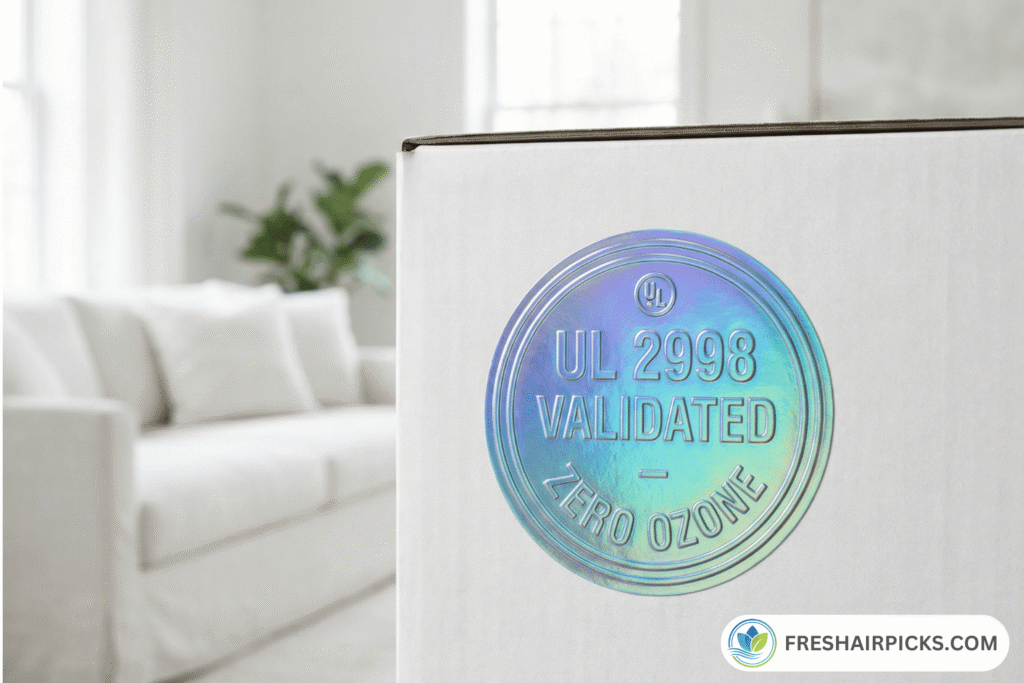
So, how do you shop safely? You need to look for specific badges on the box.
The Gold Standard: UL 2998 vs. UL 867
This is the most important technical detail in this entire guide.
- Don’t rely just on “Energy Star” or standard “CARB Certified”: These certifications use the UL 867 standard. This allows emissions up to 0.05 ppm (50 ppb). While this is “legal,” it is not zero.
- Look for UL 2998: This is the “Zero Ozone” validation. It requires emissions to be below 0.005 ppm (5 ppb)—basically background noise.
If you are researching “is levoit air purifier ozone free” or similar queries for brands like Winix, Coway, or Dyson, check their technical specs for the UL 2998 claim or an explicit statement that they use Mechanical Filtration Only.
Recommended Specs for Peace of Mind
To ensure you are getting a safe, effective unit, look for this “Safe Tech Stack”:
- Primary Filter: True HEPA (H13 or H14 grade).
- Odor Filter: Activated Carbon Pellets (not just a thin sprayed sheet).
- No Electronic Add-ons: Avoid units with “Ion,” “Plasma,” or “UV” buttons unless you can permanently turn them off.
FAQ: Addressing Common Fears
My HEPA purifier has an “Ion” or “Plasma” button. Is it safe to use?
If you have a hybrid unit (HEPA + Ionizer), the good news is that the HEPA part is safe. If you keep the “Ion/Plasma” feature turned OFF, the device produces zero ozone. You can still use the fan and filters safely. If you are asking “does winix air purifier emit ozone” because of its PlasmaWave feature, note that you can usually disable this feature if you are sensitive.
Do popular brands like Dyson, Honeywell, or Levoit emit ozone?
Most modern units from these major brands (like the Levoit Core series or Honeywell HPA series) rely primarily on mechanical HEPA filtration, which is ozone-free. However, you must check the specific model. If a model advertises “Electronic” filtration or has a permanent washable filter, investigate further. Always look for the CARB certified label.
Can ozone air purifiers actually kill mold?
Only at levels that would be dangerous for you to breathe. “Shock treatments” with high-output ozone generators are sometimes used in empty houses for smoke or mold remediation, but this is a professional hazardous cleanup process, not daily air purification. For a home with people in it, you need a HEPA filter to trap mold spores, not gas to “kill” them.
Is UV light the same as ozone?
Not exactly, but they are related. Germicidal UV light (254 nm) does not produce ozone. However, cheap or improperly made UV bulbs can leak a different wavelength (185 nm) that does create ozone. Unless a UV air purifier is certified ozone-free (UL 2998), it’s often safer to stick to standard HEPA filters.
Conclusion
The question “do air purifiers produce ozone” is really a question about trust. You are trusting a machine to protect your lungs, not pollute them.
- Stick to Mechanical Filtration: True HEPA + Activated Carbon is the gold standard for a reason. It works without side effects.
- Check the Certification: Don’t settle for “Low Ozone.” Demand Zero Ozone (UL 2998).
- Trust Your Nose: If it smells like a swimming pool, turn it off.