I get it. Buying an air purifier feels like a gamble. Unlike a vacuum cleaner where you can see the dirt disappearing from the carpet, or a dishwasher where the plates come out sparkling, an air purifier asks you to trust a box humming in the corner while the results remain largely invisible.
You are asking a fair question: Is this actually doing anything, or am I just paying for a placebo with a fan attached?
As someone who obsesses over data and has spent years testing these devices in my own home to protect my family, I have looked past the marketing fluff to find the engineering truth.
The short answer is yes—but with a massive asterisk. Air purifiers are worth it if they rely on the laws of physics (HEPA and Carbon) rather than marketing gimmicks (Ionizers and UV lights), and if they are sized correctly for your room. If you buy the wrong tech or an underpowered unit, you might as well open a window and burn a $100 bill.
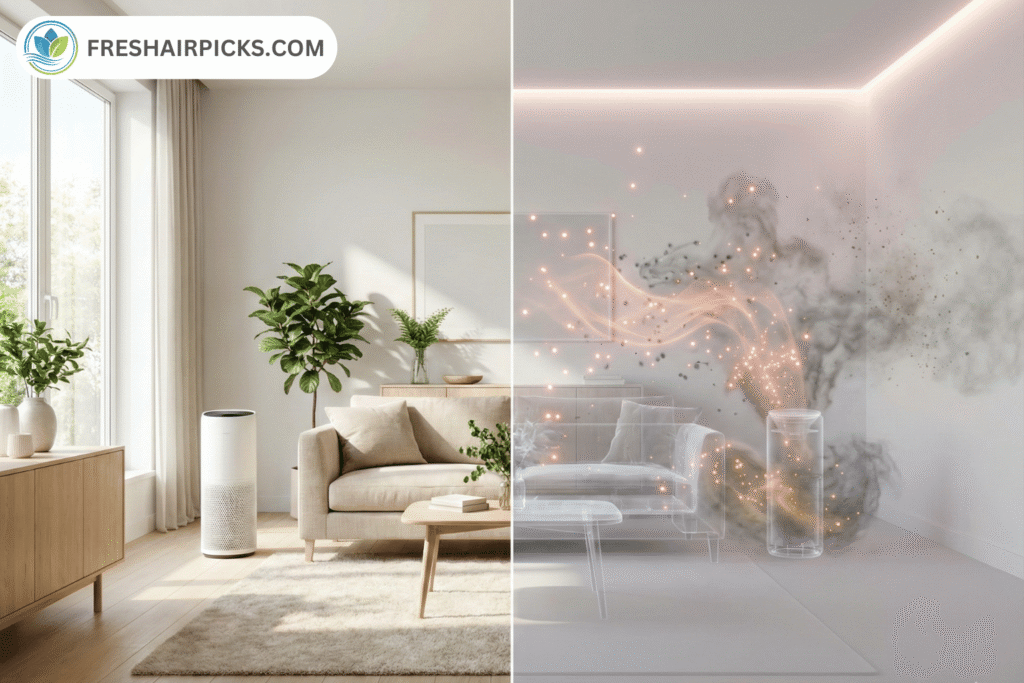
Key Takeaways
- The “Tight Home” Problem: Modern energy-efficient homes trap pollutants, making indoor air 2-5x dirtier than outdoor air.
- Physics, Not Magic: True HEPA filters work via “diffusion,” making them highly effective against viruses and smoke, not just dust.
- The 2/3 Rule: To be effective, a unit’s Smoke CADR (Clean Air Delivery Rate) must be at least two-thirds of your room’s square footage.
- Cost vs. Value: For roughly $0.20 a day in electricity and filters, a proper unit can prevent significant long-term health costs.
The Short Answer: Yes, But Only If You Follow the Physics
To understand why air purifiers have transitioned from a luxury to a necessity, you have to look at how we build houses.
We are living in the era of the “Tight Home Paradox.” In the last few decades, we have become excellent at sealing our homes to save energy. We use double-paned windows, weather stripping, and vapor barriers to keep heat in. While this is great for your utility bill, it is terrible for your lungs.
Old houses were “leaky”; they naturally exchanged fresh air. Modern homes act as accumulation chambers. According to the EPA, indoor air levels of many pollutants may be two to five times, and occasionally more than 100 times, higher than outdoor levels.
An air purifier is simply the mechanical solution to this modern engineering problem. It provides the ventilation our sealed homes are missing.
The “Invisible” Threat: What Are You Actually Breathing?
Before we talk about the machine, we need to define the enemy. If you think air purifiers are just for “dust,” you are missing the bigger picture. The particles that actually hurt you are the ones you cannot see.
The Danger of PM2.5 (It’s Not Just Dust)
The metric that keeps me up at night is PM2.5—particulate matter smaller than 2.5 microns.
These particles are so microscopic that they bypass your body’s natural defenses (your nose hairs and mucus). They travel deep into the lungs and can cross into the bloodstream, causing systemic inflammation. This isn’t just about sneezing; long-term exposure to PM2.5 is linked to heart disease and respiratory issues.
When we ask, “are air purifiers effective,” we are really asking if they can remove these bloodstream-entering particles.
Beyond Particles: VOCs and The “Stale Air” Problem
Then there are the gases. Your furniture, paint, and cleaning supplies are constantly “off-gassing” chemicals known as Volatile Organic Compounds (VOCs). Mechanical filters (HEPA) cannot catch these. This is why many people feel their home air is “stale” even if it looks clean.
To tackle this, a unit needs Activated Carbon. But be warned: many cheap units use a thin “carbon sheet” that is saturated in days. To be truly worth the money, you need a unit with pounds of granular carbon.
How They Actually Work (Busting the “Snake Oil” Myth)
One of the biggest reasons people think air purifiers are a waste of money is the “Sieve Fallacy.”
We intuitively think of a filter like a fishing net: if the holes are a certain size, anything smaller than the holes will swim right through. Skeptics often say, “A HEPA filter catches 0.3 microns, but a virus is 0.1 microns, so it won’t work.”
This is scientifically false.
The “Sieve” Fallacy: Why HEPA Catches Viruses

HEPA filters rely on complex physics, specifically a phenomenon called Brownian Motion.
- Large particles crash into the fibers (Impaction).
- Medium particles get snagged as they pass by (Interception).
- Tiny particles (like viruses) are so light that they bounce around erratically, hitting gas molecules. This zig-zag path makes them highly likely to hit a fiber and stick.
The result: HEPA filters are actually more efficient at capturing ultrafine particles (0.01 microns) than they are at capturing 0.3-micron particles. So yes, they absolutely work against smoke and airborne viruses.
The Activated Carbon Difference

For odors and chemicals, the mechanism is Adsorption (with a “d”). The gas molecules are trapped inside the microscopic pores of the carbon. A single pound of activated carbon has a surface area equivalent to about 100 acres. This immense surface area is what makes the investment worth it—provided you buy a unit with enough carbon weight.
The “Snake Oil” Test: How to Spot a Fake
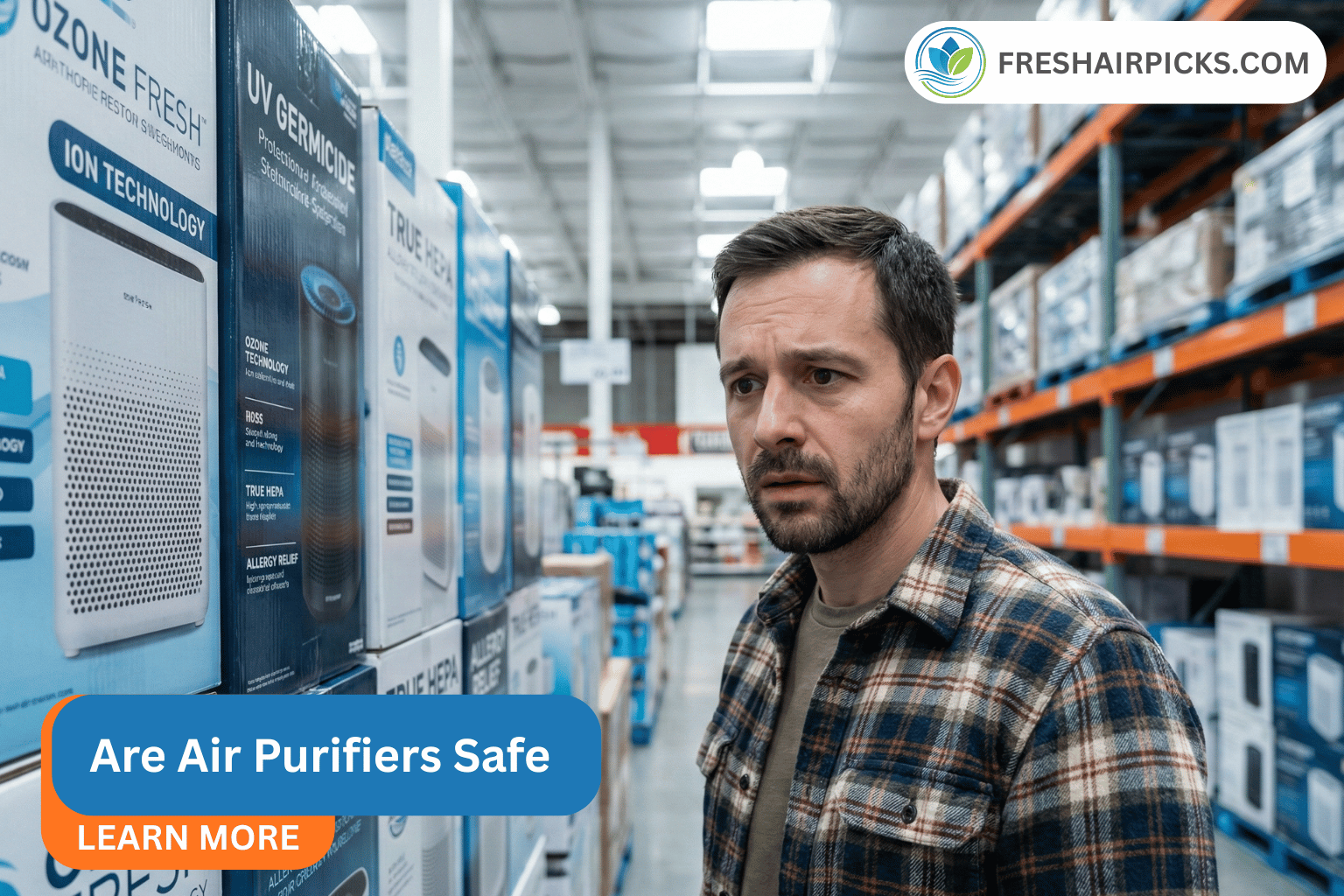
Nothing hurts the “worth” of an appliance more than buying a lemon. The market is flooded with devices that are not only useless but potentially dangerous. Here is how I separate the engineering from the marketing.
Red Flag #1: The “Ionic” or “Ozone” Gimmick
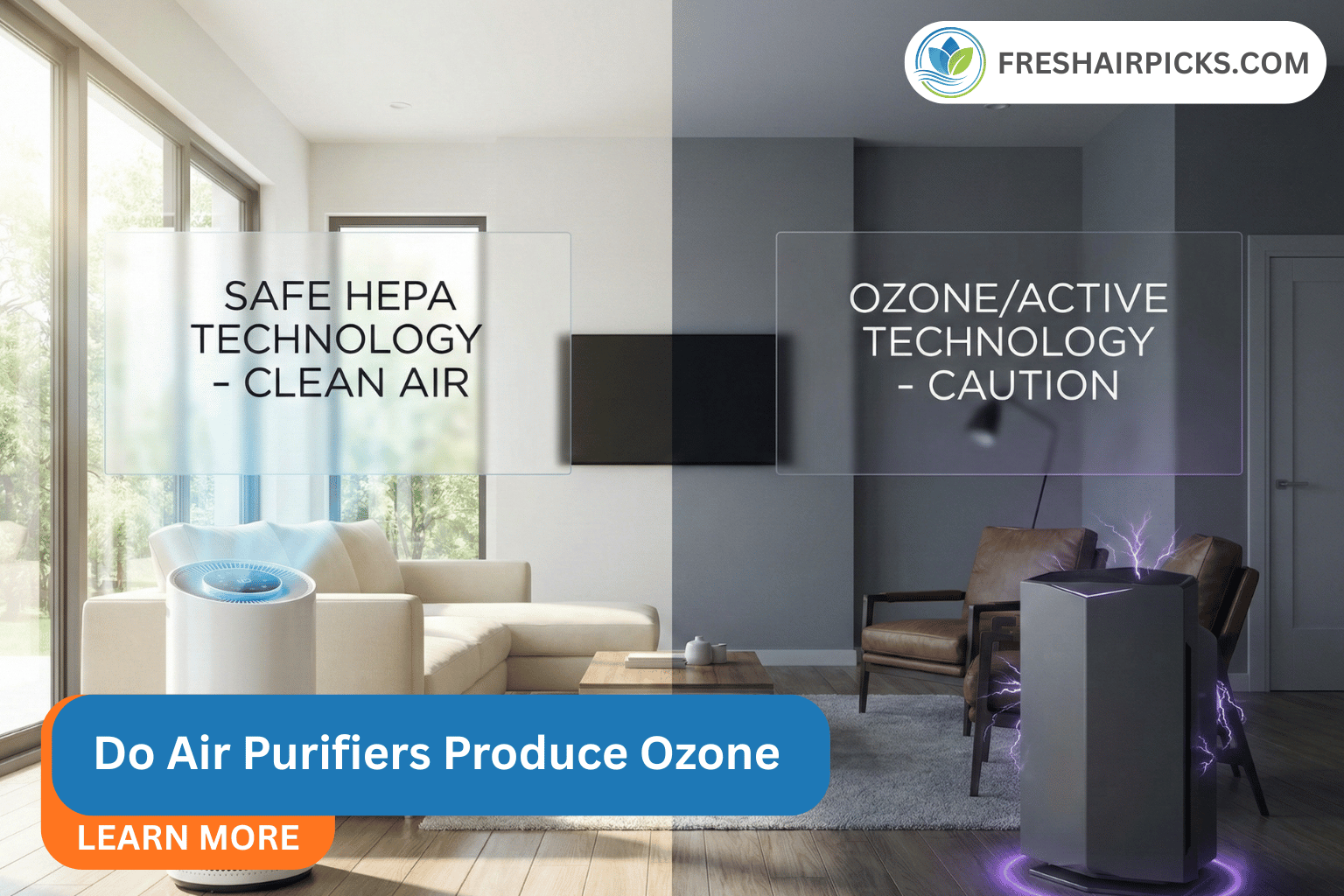
If you see a device marketing “fresh mountain air,” “energized oxygen,” or “ionization” without a clear “ozone-free” certification, run away.
Many of these devices generate ozone ($O_3$), a lung irritant that can actually cause scar tissue to form in the lungs. A “worthwhile” air purifier is strictly mechanical: a fan and a filter. It doesn’t need to add anything to the air to clean it.
Red Flag #2: Missing the CADR Rating
If a manufacturer won’t tell you their Clean Air Delivery Rate (CADR), they are hiding something.
Efficiency means nothing without airflow. You can have a filter that captures 100% of particles, but if the fan is the size of a computer mouse, it won’t clean your room. CADR measures the volume of filtered air. No CADR number? No deal.
Sizing It Right: The “2/3 Rule” for Maximum Value
This is where most buyers fail. They buy a small, cheap unit for a large living room and then wonder why their allergies haven’t improved.
To get a tangible Return on Investment (ROI), you need to achieve roughly 4.8 Air Changes Per Hour (ACH). The easiest way to calculate this is the 2/3 Rule.
Calculating Your Room’s Needs
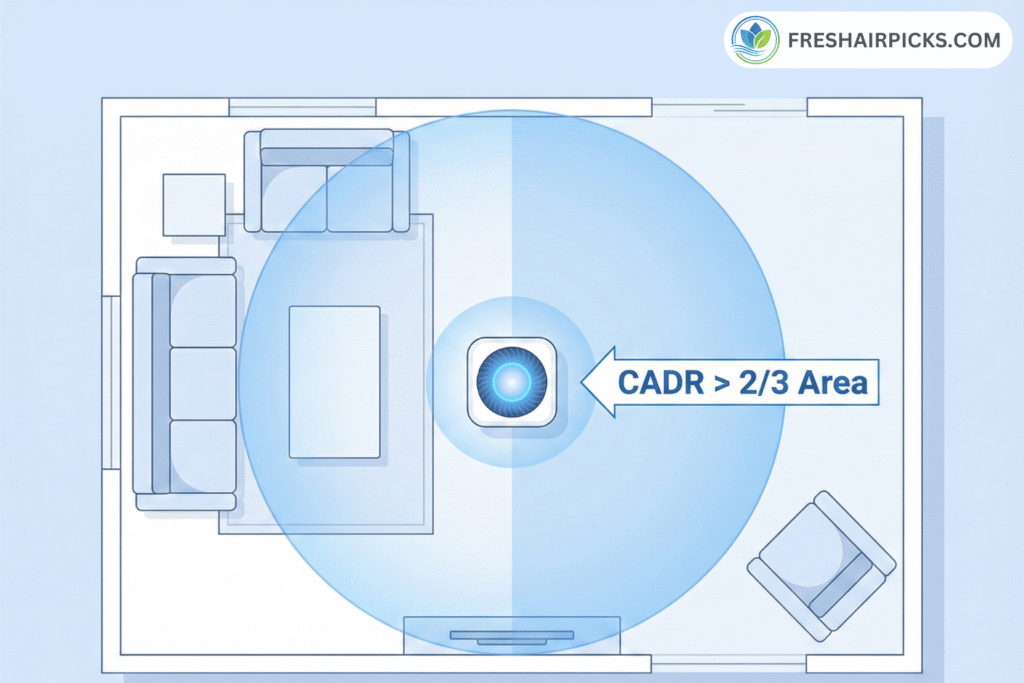
Take the square footage of your room and ensure the unit’s Smoke CADR is at least two-thirds of that number.
$$Smoke \ CADR \ge \frac{2}{3} \times Room \ Area$$
Example:
If your living room is 300 square feet:
$$300 \times \frac{2}{3} = 200$$
You need a unit with a CADR of at least 200. Anything less, and the pollution is entering the room faster than the machine can clean it.
Why You Should “Oversize” (The Noise Factor)
I always recommend buying a unit rated for a slightly larger room than you have. Why? Because you can run a large unit on “Medium” or “Low” speed to get the cleaning power you need near-silently. A small unit will have to run on “Turbo” (sounding like a jet engine) just to keep up.
The Financial Verdict: Cost of Ownership vs. Health Savings

Finally, let’s talk money. Are air purifiers a waste of money, or a smart investment?
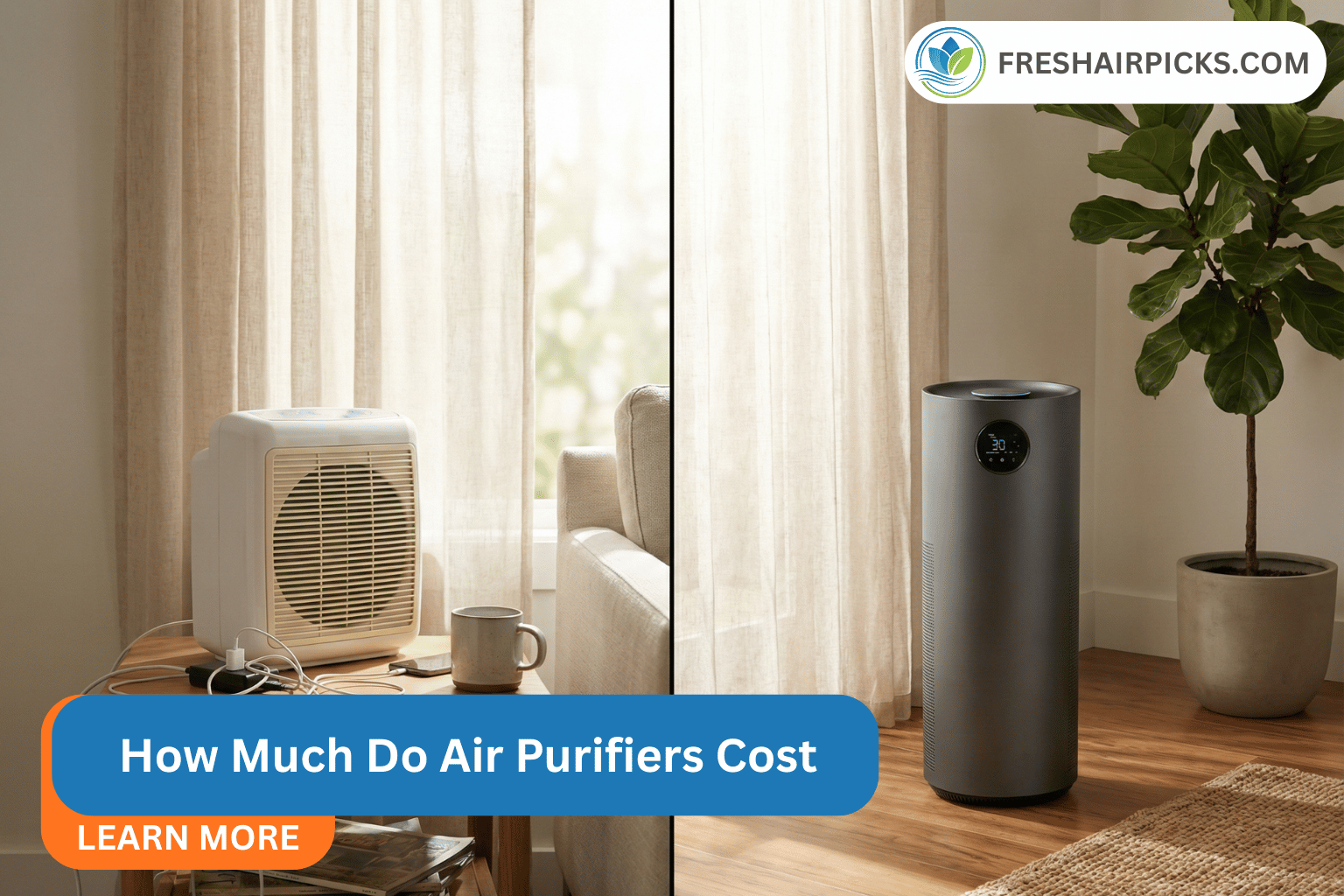
The Real Daily Cost (Electricity + Filters)
Many people fear the electricity bill. The good news is that modern Energy Star units are incredibly efficient. Most consume less energy than a standard lightbulb.
- Electricity: Approx. $0.05 – $0.15 per day (running 24/7).
- Filter Replacements: $40 – $80 per year.
When you crunch the numbers, the total cost of ownership is often less than $0.25 per day.
The Cost of Illness (ROI)
Compare that $0.25 daily cost to the alternative.
- The cost of a single asthma inhaler.
- The cost of over-the-counter allergy medicine.
- The productivity lost from poor sleep due to congestion.
If an air purifier prevents just one severe allergy flare-up or helps you sleep better (improving your work performance), it has paid for itself ten times over.
FAQ: Addressing Your Final Doubts
Do air purifiers remove oxygen?
No. This is a common myth. Air purifiers cycle the air; they do not remove oxygen or add carbon dioxide. They do not change the gas balance of the room.
Will it dry out the air?
No. An air purifier is not a dehumidifier. It captures particles but does not remove moisture.
How often do I really need to change filters?
Manufacturers say 6 months, but it depends on your air quality. Some modern units have sensors that tell you exactly when to change them. Neglecting the filter is the quickest way to make the machine worthless.
Can I sleep with it on?
Yes, and you should. Most users find the “pink noise” of the fan aids sleep, and breathing clean air overnight reduces morning congestion.
Final Verdict: Who Should Buy One?
Are air purifiers worth it? If you value your long-term health and want to mitigate the effects of modern “tight” housing, the answer is an emphatic yes.
You should absolutely get one if:
- The Vulnerable Protector: You have children, elderly parents, or asthma sufferers in the home.
- The Pet Owner: You love your pets but hate the dander and hair.
- The Urban Dweller: You live near a city center or highway (high PM2.5).
- The Wildfire Resident: You live in an area prone to smoke.
The Checklist for a Smart Buy:
- True HEPA Filter (Avoid “HEPA-type”).
- AHAM Verifide CADR rating.
- No Ozone (CARB Certified).
- Correct Size (Use the 2/3 Rule).