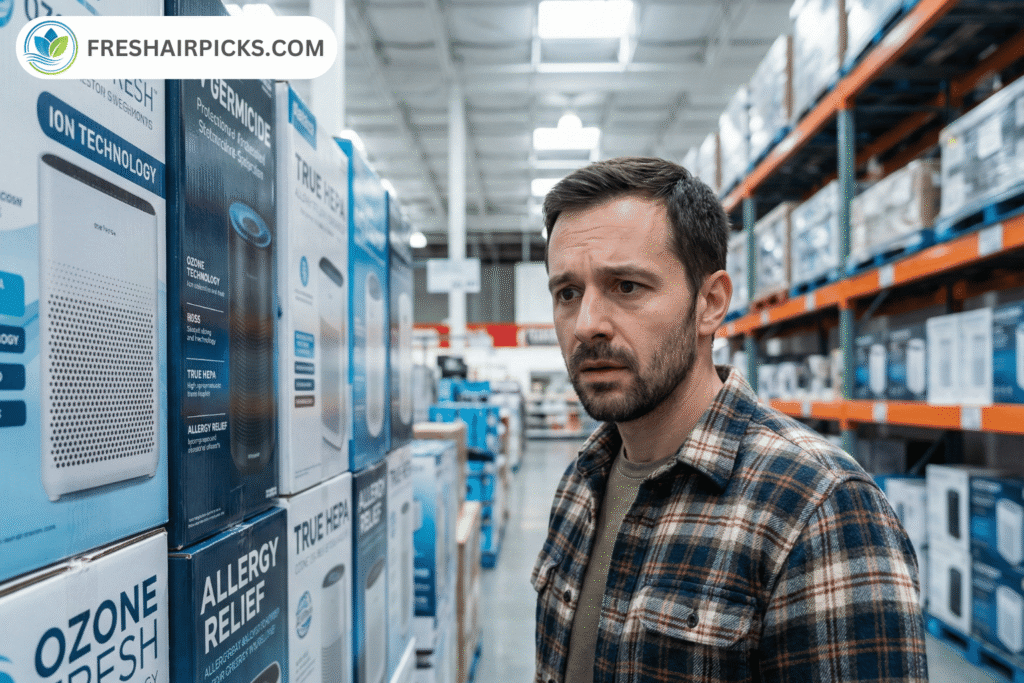
I remember the first time I stood in the aisle of a big-box store, staring at a wall of air purifiers. Some promised “forest-fresh air” with ionization; others boasted about “killing germs” with UV light. As a father and a data nerd, I didn’t just want clean air—I wanted to know if the machine I was putting in my child’s room was actually safe.
The truth is, the marketing jargon often hides a complex reality. You are right to be skeptical. The “fresh” smell some devices promise can actually be the scent of a chemical reaction you don’t want happening in your lungs.
The short answer is this: Air purifiers are incredibly safe and beneficial for your health, but ONLY if you choose the right technology (Mechanical/HEPA) and strictly avoid the wrong one (Ozone-generating Electronic units).
In this guide, I’m going to strip away the sales hype and look at the physics and physiology. We will distinguish between the medical-grade tech that protects you and the electronic gimmicks that could potentially harm you.
Key Takeaways
- Safety Depends on Tech: Mechanical filtration (HEPA) is inherently safe because it is passive. Electronic air cleaning (Ionizers, Ozone Generators) carries risks because it is active and “additive.”
- The Ozone Danger: Ozone is a lung irritant. Never use a device that is an “Ozone Generator,” and be wary of ionizers that aren’t strictly certified.
- The Gold Standard: For absolute safety, look for “True HEPA” filtration and, if electronic features are present, the UL 2998 “Zero Ozone” verification.
- Efficacy is Safety: A weak air purifier creates a false sense of safety. You need a high Clean Air Delivery Rate (CADR) to actually lower infection or pollution risks.
The Core Safety Distinction: Mechanical vs. Electronic
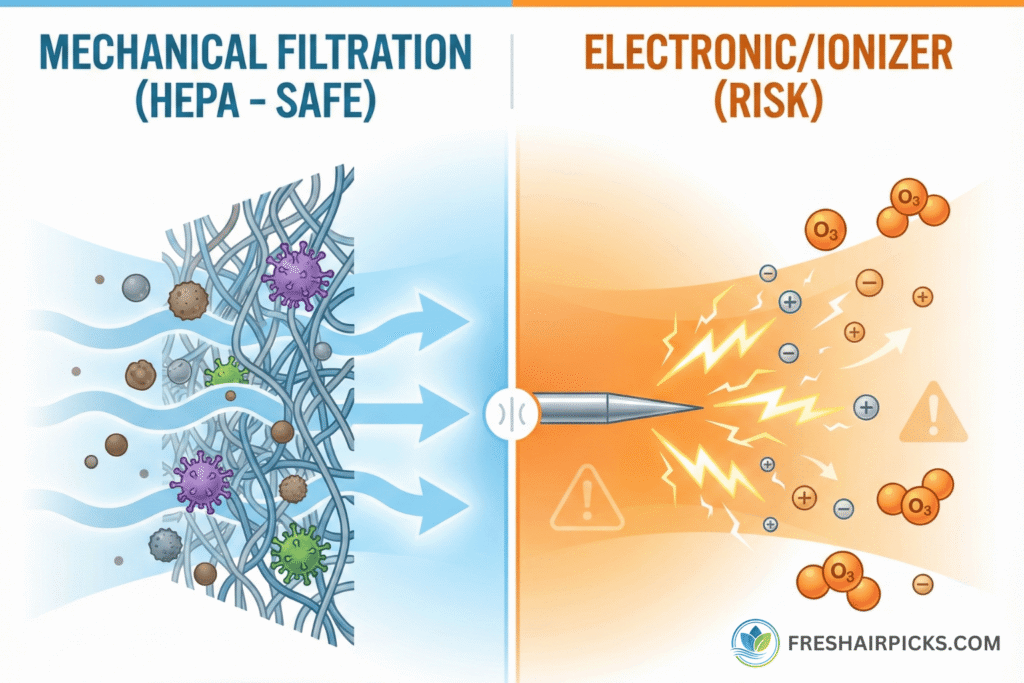
To understand if air purifiers are safe, you have to stop looking at them as one single category of appliance. In the eyes of safety regulators and physicists, there are really two distinct types of machines.
Mechanical Filtration (The Safe Standard)
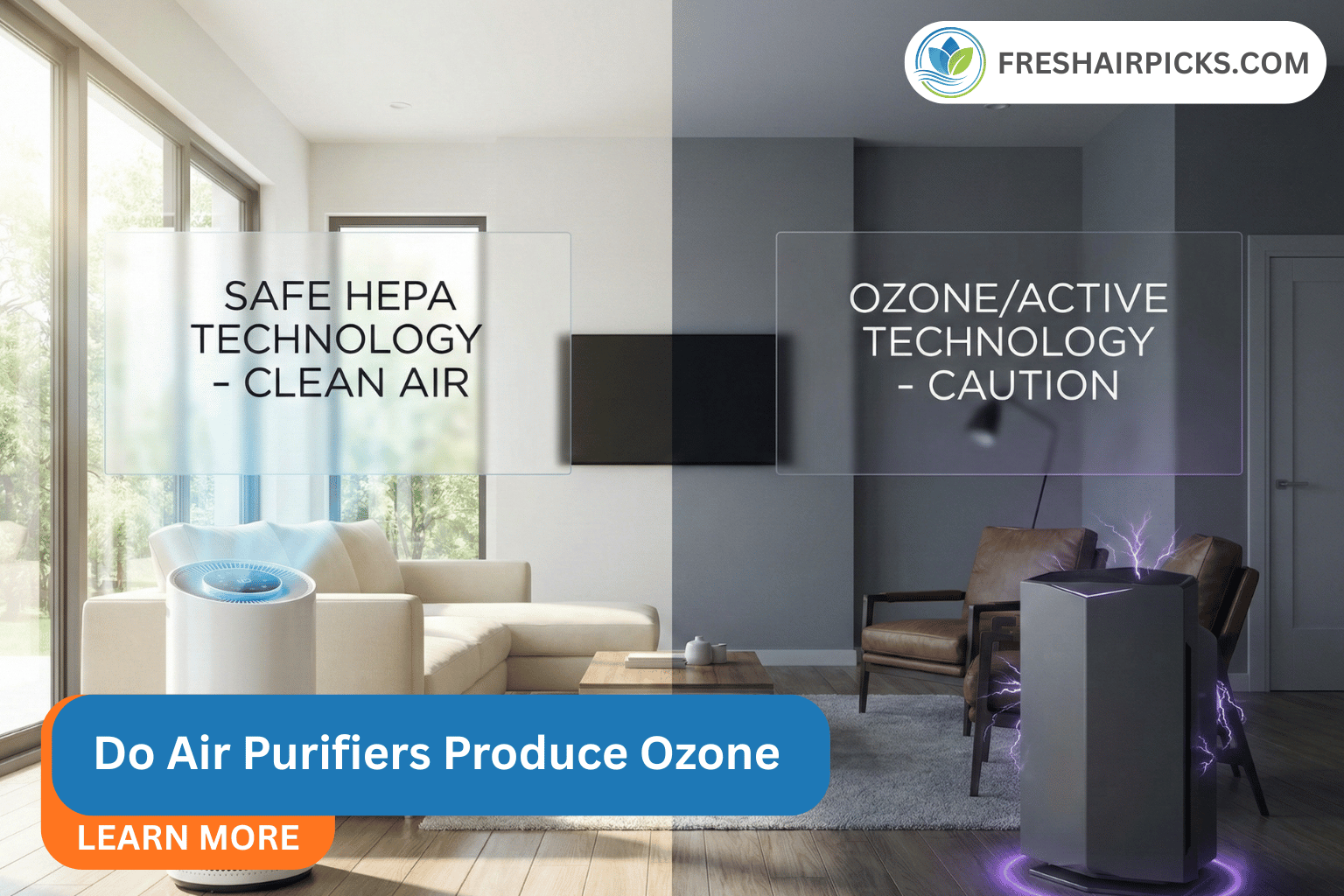
This is what I call “Passive Safety.” Mechanical air purifiers—specifically those using HEPA filters—operate on a subtractive principle. A fan pulls air through a dense web of fibers, trapping particles like dust, smoke, and dander.
Think of it like a colander draining water from pasta. The colander doesn’t add chemicals to the pasta; it just physically separates the solid from the liquid. Because mechanical filters rely on fluid dynamics (physics) rather than chemical reactions, they are inert. They do not add anything to the air you breathe; they only take the bad stuff out.
Electronic Air Cleaning (The Active Risk)
This category includes ionizer air purifiers, electrostatic precipitators (ESPs), PCO (Photocatalytic Oxidation), and plasma air purifiers. These are “Active” technologies.
Instead of just catching a particle, these devices use high-voltage electricity to charge particles or generate reactive molecules to “zap” pollutants. The problem is that this process is “additive.” It introduces new elements into your air—specifically ions and, frequently, ozone ($O_3$).
When people ask, “are air purifiers toxic?” or “are air purifiers bad for you?”, they are almost always asking about the side effects of this specific category.
The Hidden Danger: Understanding Ozone Risks
The biggest safety concern in the air purification world is ozone. While ozone high up in the stratosphere protects us from the sun, ground-level ozone is a potent respiratory irritant.
Why Ozone is Dangerous (Even in Small Amounts)
Ozone is unstable. When you inhale it, it reacts chemically with the biological tissue of your lungs. It’s essentially “burning” the lining of your airways, similar to how the sun burns your skin.
According to the EPA and medical data, breathing even small amounts of ozone can trigger:
- Airway Constriction: Tightness in the chest and shortness of breath.
- Inflammation: Swelling of the bronchial tubes.
- Susceptibility: It damages the cilia (tiny hairs) that clear mucus, making you more prone to respiratory infections.
This is why the question “are ozone air purifiers safe?” has a definitive answer from health professionals: No. They should not be used in occupied spaces. This is especially critical if you are asking “are air purifiers safe for pets?” Birds and small mammals have smaller respiratory systems that are far more sensitive to ozone than humans.
Secondary Chemical Risks (Indoor Chemistry)
There is a hidden reaction that many manufacturers don’t talk about. If you use an electronic air cleaner that emits ozone, that ozone can react with common household scents—like the pine or citrus (terpenes) in your floor cleaner.
This reaction can actually create formaldehyde (a carcinogen) and ultrafine particles. In this scenario, an ionic air purifier could theoretically make the air inside your room more toxic than the air outside.
Regulatory Safety Nets: Who Can You Trust?
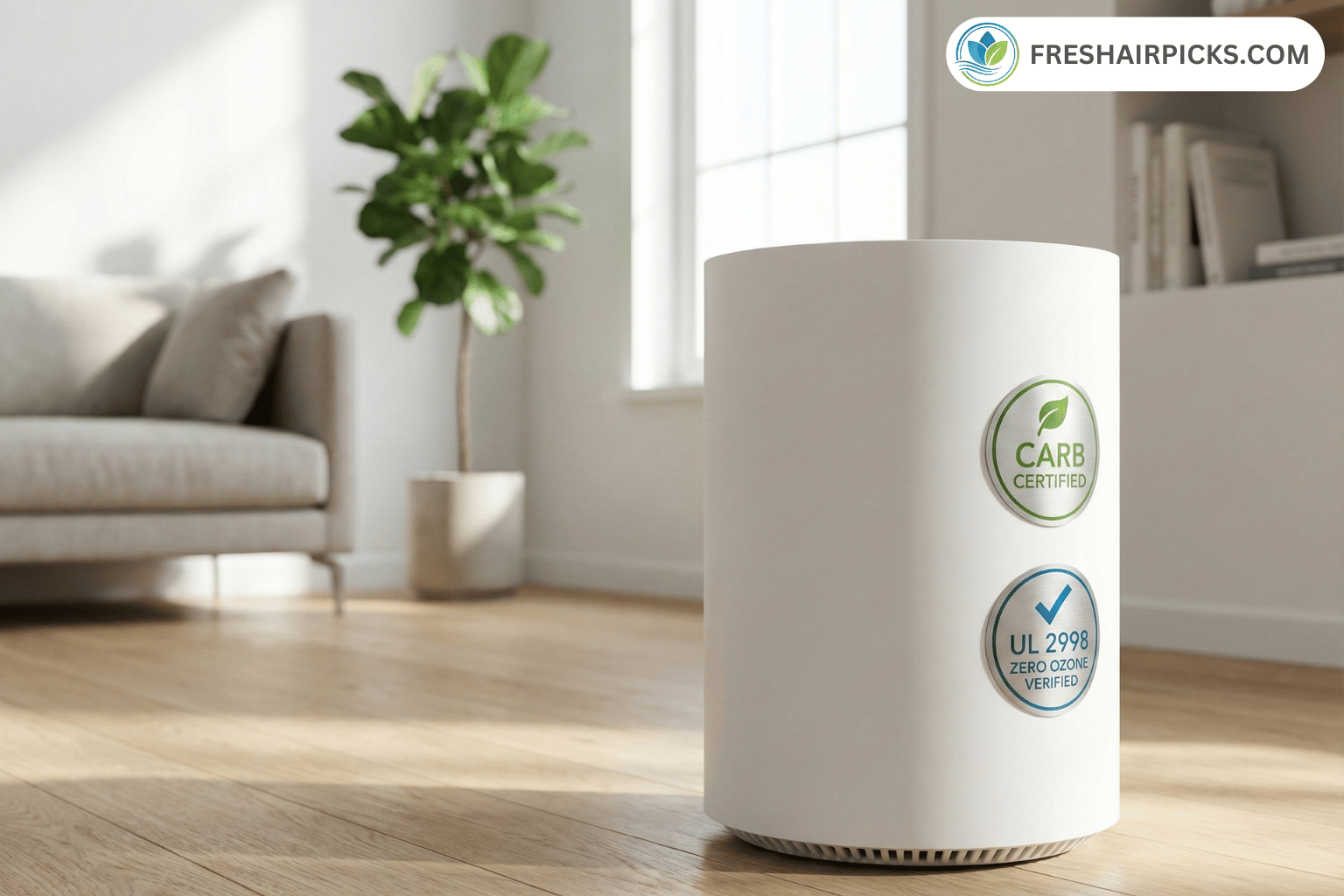
If you are worried about whether levoit air purifiers are safe or if ionic air purifiers are effective without being dangerous, you need to look for specific regulatory labels. Marketing terms like “Plasma” or “Active Oxygen” are unregulated; safety certifications are not.
California Air Resources Board (CARB)
California has the strictest air quality laws in the US. The California Air Resources Board (CARB) mandates that any portable air cleaner sold in the state must emit no more than 0.050 parts per million (ppm) of ozone.
Important Caveat: A “CARB Certified” label means the device is legal. It means it doesn’t produce dangerous levels of ozone (above 50 ppb). However, for someone with severe asthma, even trace amounts can be irritating. The label is a safety cap, not a health endorsement.
UL 867 vs. UL 2998 (The Zero Ozone Standard)
If you want to know “is it safe to use air purifiers” with total peace of mind, look for the UL verification marks.
- UL 867: This is the standard baseline. It allows up to 0.050 ppm (50 ppb) of ozone.
- UL 2998: This is the “Gold Standard” for safety. To pass this, a device must emit less than 0.005 ppm (5 ppb) of ozone. This is effectively “Zero Ozone.”
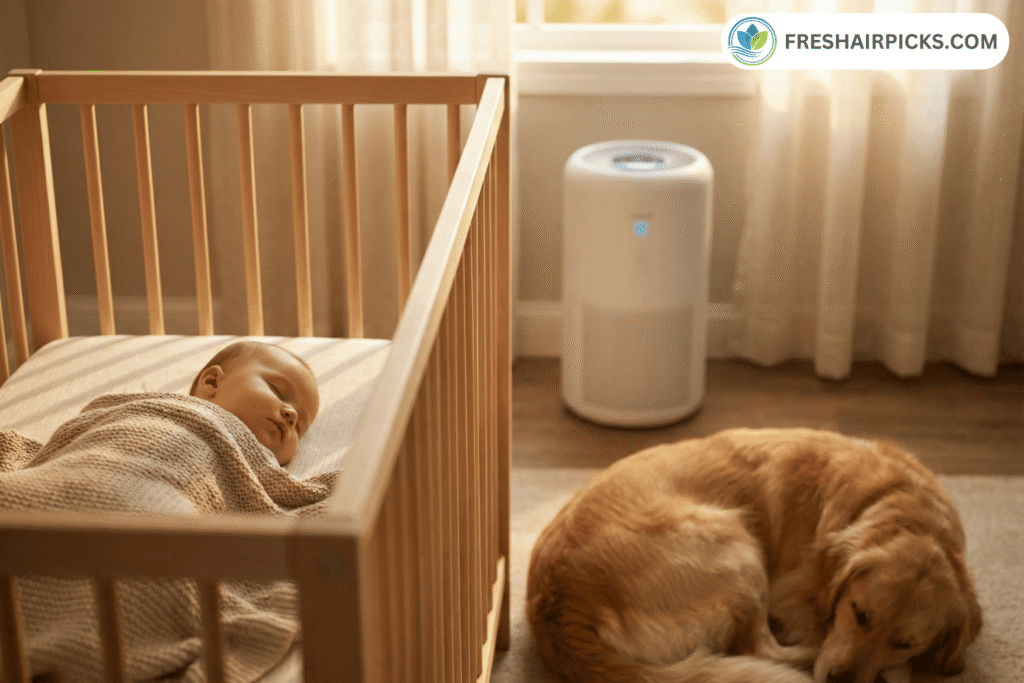
If you are looking for air purifiers safe for babies or air purifiers safe for birds, I highly recommend looking for the UL 2998 validation.
Why HEPA is the “Medical-Grade” Safe Haven

If you want to opt out of the risk entirely, the solution is simple: Stick to Mechanical Filtration.
Born from the Manhattan Project
The HEPA air purifier wasn’t invented to sell appliances; it was invented to save lives. It was developed during World War II for the Manhattan Project to protect scientists from radioactive particles.
The logic remains the same today. If this technology is safe and effective enough to filter radioactive dust without creating dangerous side effects, it is safe enough for your bedroom. Are hepa air purifiers safe? Yes, definitively. They are the benchmark.
No Byproducts, No “Black Walls”
One common complaint with ionic air purifiers is the “Black Wall Effect.” Because ionizers charge particles, those particles become sticky. They often stick to the nearest surface—your wall, your curtains, or your face—rather than being trapped in the unit.
HEPA filters physically trap the dirt. When you pull out a used HEPA filter, you can see the gray mat of dust. That is dust that isn’t in your lungs and isn’t smeared on your wall.
Efficacy IS Safety: Understanding CADR
We often think of safety as “not getting hurt.” But in the world of air quality, safety also means “getting protected.” If your air purifier is too weak to capture a virus or wildfire smoke, it is providing a false sense of security.
The False Sense of Security
Many small, trendy devices are marketed as “personal air purifiers.” However, if they have a low Clean Air Delivery Rate (CADR), they cannot circulate the air in the room fast enough to lower the particle count significantly.
The 2/3 Rule for Room Sizing
To ensure your device is actually protecting your health, follow the AHAM “2/3 Rule.” The Smoke CADR rating of your unit should be at least two-thirds of the room’s area in square feet.
- Example: For a 120 sq. ft. room, you need a CADR of at least 80.
If you are dealing with high-risk scenarios, like wildfire smoke, you want that ratio to be even higher (1:1).
Common Myths & FAQs (The “Safety Check”)
Are Filterless or Ionic Air Purifiers Better?
No. While the idea of never buying a filter is appealing, ionic air purifiers are often less effective at removing dust and pollen than HEPA filters. More importantly, “filterless” almost always implies electronic technology, which brings us back to the ozone risks. If you are asking “are ionic air purifiers safe,” the answer is: they are generally regulated, but mechanical HEPA is safer and more effective.
Are Air Purifiers Safe for Pets and Plants?
Are air purifiers safe for dogs and cats? Generally, yes, especially HEPA models. In fact, they are excellent for removing pet dander. However, are ozone air purifiers safe for pets? Absolutely not. Birds, in particular, have highly efficient respiratory systems that absorb toxins rapidly.
Are air purifiers good for plants? Yes, mechanical ones are beneficial. Dust can settle on plant leaves, blocking sunlight and hindering photosynthesis; a purifier reduces this dust. However, plants are sensitive to ozone (it causes necrosis on leaves), so avoid ionizers around your indoor garden.
Are UV Light Air Purifiers Safe?
Are air purifiers with UV light safe? Usually, yes. The UV-C light is contained inside the housing, so you are not exposed to the light (radiation) directly. However, the question “is uv c light safe in air purifier” also involves efficacy. In many portable units, the air moves too fast for the UV light to actually kill bacteria effectively (“dwell time”). While safe, it is often more of a marketing feature than a safety necessity.
Are Air Purifiers Covered by Insurance?
This is a common question for health-focused buyers. Are air purifiers covered by insurance? In many cases, yes, if they are deemed a “medical necessity.” If a doctor writes a Letter of Medical Necessity (LMN) for asthma, COPD, or severe allergies, you may be able to purchase a purifier using HSA or FSA funds, or get reimbursement from your provider. Note that insurance typically approves specific medical-grade HEPA units, not generic ionizers.
Does “CARB Certified” mean it’s healthy?
No. It means it is legal. It guarantees ozone emissions are below 0.050 ppm. For the “Health Optimizers” reading this, I recommend aiming for UL 2998 (Zero Ozone) or strictly mechanical HEPA units to avoid even trace emissions.
Conclusion: How to Buy Safe
So, is it safe to use air purifiers? Yes—and in today’s world of increasing pollutants and viral concerns, I would argue it is necessary. But you must be selective.
To ensure you are buying a medical-grade safety device and not a toy (or a hazard), follow this checklist:
- Technology: Stick to Mechanical (True HEPA) filtration. This is the “do no harm” choice.
- Certification: Ensure it is CARB Certified. For extra safety (especially for asthmatics), look for UL 2998.
- Power: Don’t guess. Check the CADR rating and ensure it covers your room size (The 2/3 Rule).
- Avoid: Any device labeled as an “Ozone Generator,” and be very cautious with “Ionizers” unless they have the UL 2998 badge.
True safety is boring. It doesn’t zap, it doesn’t glow, and it doesn’t smell like a thunderstorm. It’s just a fan and a high-quality filter, quietly protecting your lungs.