
How I Test Air Purifiers: A Father’s Honest Approach to Finding the Best Air Cleaners
My Promise to You: Real Testing, Real Results
Hi, I’m Daniel Foster, and like many parents, I started this journey because of my child’s allergies. After buying several air purifiers that didn’t work as advertised, I realized there was a serious problem: most reviews are either sponsored content or based on manufacturer specs alone.
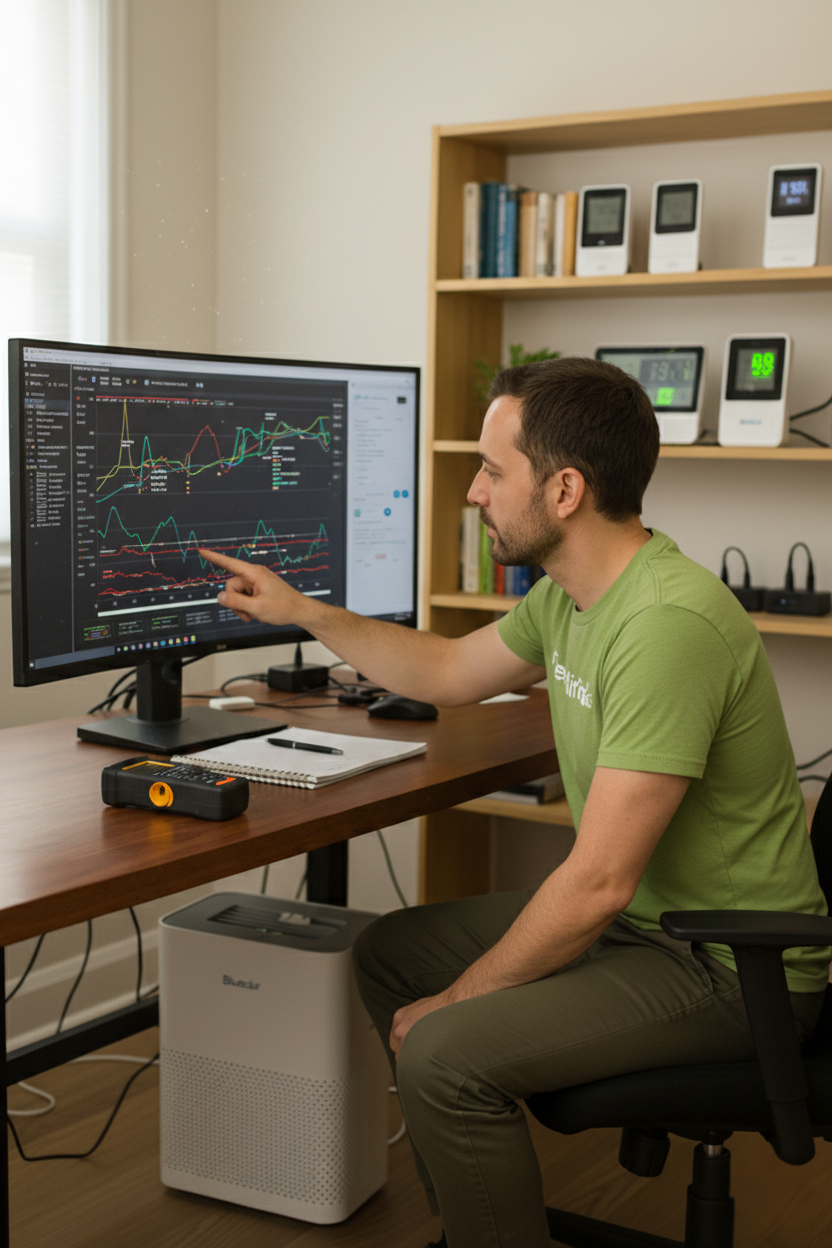
That’s why I decided to do something different. I test every air purifier the same way any careful parent would—thoroughly, honestly, and with real-world conditions in mind.
📋 My Testing Philosophy in a Nutshell
My Promise in 3 Points:
✓ I Buy It Myself: Every product is purchased with my own money. No freebies, no bias.
✓ Real Home, Real Tests: I test in a real family home, not a sterile lab.
✓ Data-Driven Honesty: My recommendations are based on numbers, not marketing hype.
My Home Testing Setup
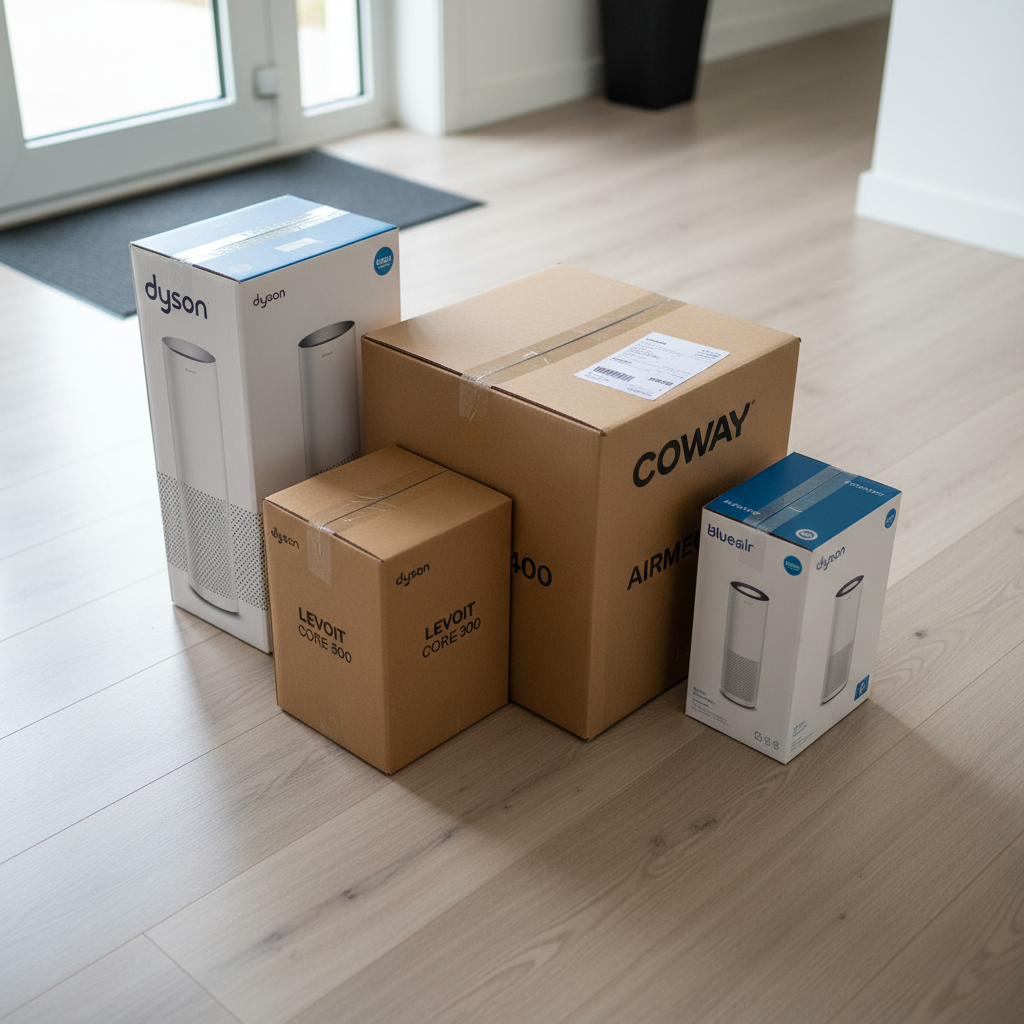
My Testing Equipment (Built Over 3 Years)
After years of frustration with unreliable reviews, I’ve gradually invested in proper testing tools:
Air Quality Monitoring:
- Dylos DC1100 Pro Air Quality Monitor ($300) – Tracks particle counts 24/7
- PurpleAir PA-II ($279) – Cross-references PM2.5 readings
- TempestX Weather Station ($199) – Environmental conditions
- Basic smoke detector test spray – For controlled particle introduction
Sound & Energy Testing:
- Digital Sound Level Meter ($45) – Multiple distance measurements
- Kill A Watt Power Monitor ($25) – Real energy consumption tracking
- Smartphone apps for frequency analysis and additional measurements
Documentation Tools:
- High-resolution camera for build quality documentation
- Digital scale for filter weight tracking
- Measuring tape for room dimensions and coverage testing
My Testing Spaces
Primary Testing Room: My 320 sq ft living room
- Open floor plan with normal furniture
- Two windows (realistic air leakage)
- Regular family activities during testing
Secondary Testing Areas:
- Master bedroom (180 sq ft) – Overnight testing
- Home office (120 sq ft) – Concentrated workspace testing
- Kids’ playroom (200 sq ft) – High-activity environment
My 8-Step Testing Process
Step 1: Real-World Unboxing & Setup (15 minutes)
What I Check:
- How easy is it to unpack and set up?
- Are instructions clear for a regular parent?
- Does everything feel solid and well-made?
- Can I change filters without tools or frustration?
My Focus: If I can’t figure it out quickly, most busy parents won’t either.
Step 2: Baseline Air Quality Testing (24 hours)
My Method: I run my air quality monitors for a full day before turning on the air purifier to establish normal particle levels in my home.
What I Track:
- PM2.5 and PM10 particle counts
- Normal daily fluctuations (cooking, pets, opening doors)
- Room-to-room differences
- Typical pollution events in my household
Why This Matters: This gives me realistic expectations for what any air purifier needs to handle.
Step 3: Clean Air Delivery Rate (CADR) Reality Check
Instead of Complex Lab Tests, I Do This:
The Cooking Test:
- I cook something that creates particles (usually bacon or stir-fry)
- Let particle counts rise naturally
- Turn on the air purifier at different speeds
- Track how quickly it brings levels back to normal
The Candle Test:
- Burn a candle for 10 minutes, then blow it out
- Measure particle spike from smoke
- Time how long the air purifier takes to clear the air
- Compare results at different fan speeds
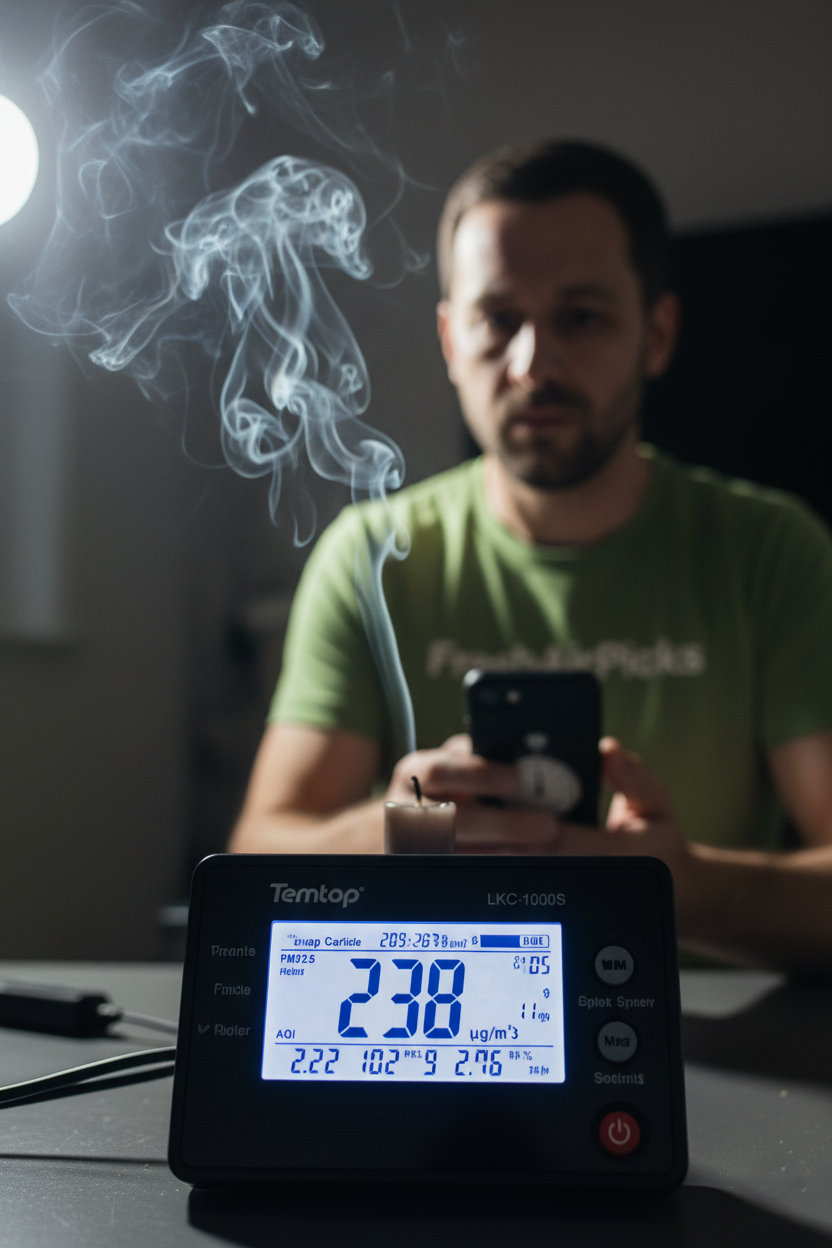
My Scoring:
- Excellent: Clears cooking smoke in under 15 minutes
- Good: 15-30 minutes to clear
- Average: 30-45 minutes
- Poor: Takes over 45 minutes or barely makes a difference
Step 4: Real Family Life Testing (2 weeks minimum)
Living With It Daily:
Week 1 – Normal Operations:
- How does it handle morning routines?
- Does it keep up with cooking smells?
- Is auto mode actually useful?
- How’s the air quality when we wake up?
Week 2 – Stress Testing:
- Pet grooming day (lots of dander)
- Having friends over (more activity)
- Cleaning day (dust and chemical sprays)
- Seasonal challenges (pollen, humidity changes)
What I’m Really Looking For:
- Does it make a noticeable difference in our daily comfort?
- Are allergies better or worse with this unit?
- Does it handle realistic family pollution sources?
Step 5: Noise Level Reality Check
My Practical Approach:
Daytime Testing:
- Can I have normal conversations with it running?
- Does it interfere with TV watching?
- Is it distracting during work-from-home calls?
Nighttime Testing:
- Can my family sleep with it on the lowest setting?
- Does it have annoying tones or frequencies?
- How about medium speed if we need faster cleaning?
My Categories:
- Sleep-Friendly: Quiet enough for bedroom use
- Living Room Appropriate: Fine for daily activities
- Too Loud for Comfort: Only usable when no one’s around
Real-World Measurements: I measure sound from where people actually sit—3 feet away for living room use, 6 feet for bedroom placement.
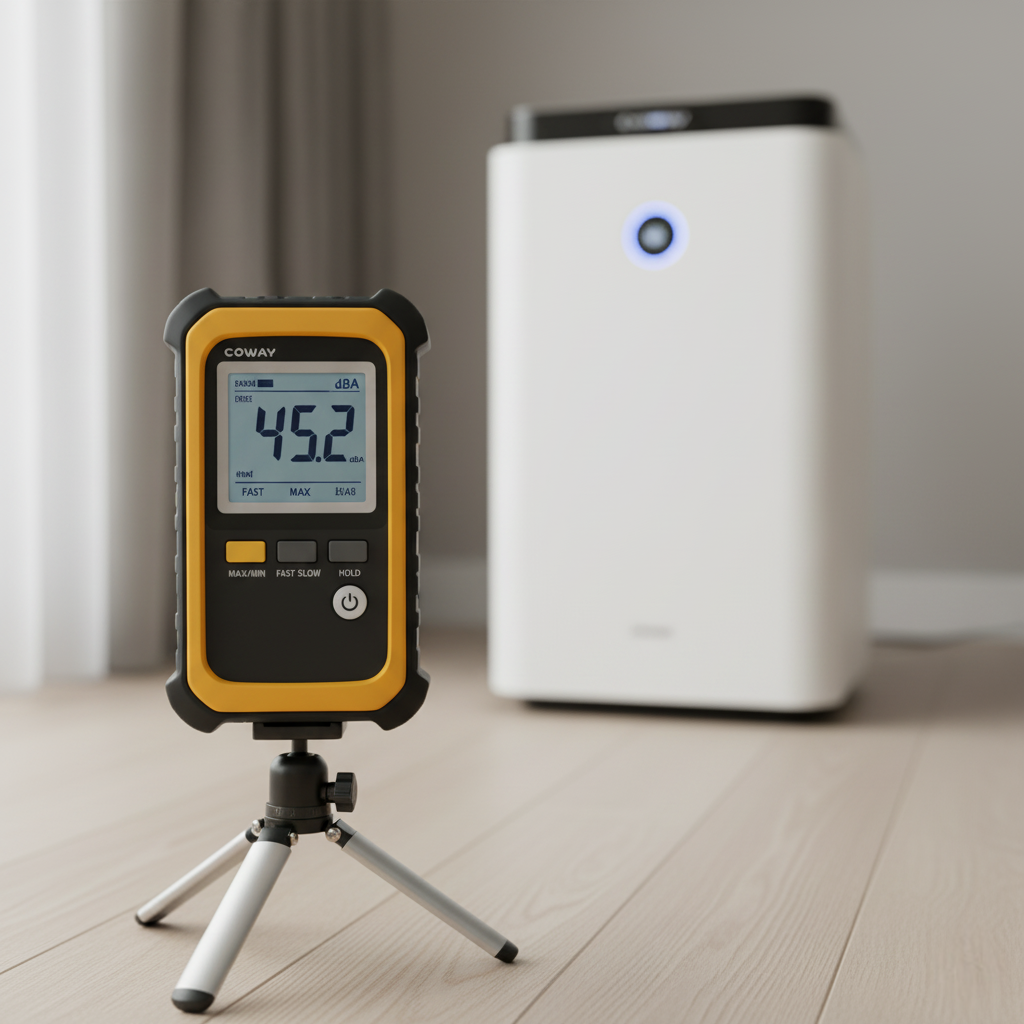
What this means for you: You’ll know exactly which purifier won’t disturb your sleep or interrupt your favorite TV show.
Step 6: Energy Cost Reality
What It Actually Costs to Run:
I track power usage for 2 full weeks and calculate:
- Cost per day at different speed settings
- Monthly cost for typical usage
- Annual energy expense
- How it compares to running a ceiling fan or other appliances
My Practical Rating:
- Very Efficient: Under $2/month for normal use
- Reasonable: $2-5/month
- Expensive: $5-10/month
- Energy Hog: Over $10/month
What this means for you: You’ll avoid any nasty surprises on your monthly electricity bill.
Step 7: Filter Performance & Costs
The Real Cost of Ownership:
Filter Life Testing:
- I weigh filters before and after use
- Track how particle removal efficiency changes over time
- Note when the unit starts working harder (higher speeds needed)
- Document when filters actually need changing (not just manufacturer timeline)
Cost Analysis:
- Price per replacement filter set
- How often you really need to change them
- Where to buy replacements reliably
- Total yearly filter costs
Value Assessment:
- Annual filter cost vs. unit price
- Filter availability and sourcing ease
- Whether cheaper aftermarket options work well
What this means for you: You’ll understand the true long-term cost before you buy.
Step 8: Smart Features Reality Test
Do the Smart Features Actually Help?
App Testing:
- Is the app reliable and useful?
- Can I actually control everything remotely?
- Are the air quality readings accurate compared to my monitors?
- Do scheduling and automation features work consistently?
Sensor Accuracy:
- I compare built-in sensors with my independent monitors
- Check if auto mode responds appropriately to real pollution events
- Test sensor responsiveness to different particle sources
Smart Home Integration:
- How well does it work with Alexa, Google, or Apple HomeKit?
- Are voice commands reliable?
- Does it integrate with other smart home routines?
My Honest Scoring System
How I Rate Each Air Purifier
Performance (40% of total score):
- Real-world particle removal effectiveness
- Speed of air cleaning during pollution events
- Consistency across different room sizes
- Ability to maintain clean air over time
Usability (25% of total score):
- Setup and daily operation ease
- Filter changing simplicity
- Control clarity and responsiveness
- Maintenance requirements
Noise Level (20% of total score):
- Acceptable sound levels for intended use
- Sound quality (no annoying tones)
- Sleep compatibility
- Conversation interference
Value (15% of total score):
- Purchase price vs. performance
- Energy costs
- Filter replacement costs
- Overall cost of ownership
My Final Ratings:
★★★★★ Exceptional (9-10): Outstanding performance, highly recommended for most homes
★★★★☆ Excellent (8-9): Great choice with minor limitations
★★★☆☆ Good (7-8): Solid performer for specific needs
★★☆☆☆ Fair (6-7): Works but has notable issues
★☆☆☆☆ Poor (Below 6): Not recommended
Why My Testing is Different
No Sponsored Reviews, Ever
My Independence Promise:
- I buy every air purifier with my own money
- No manufacturer partnerships affect my testing
- I keep units for months, not days
- My kids’ health depends on honest results
Real Family Testing Environment
Actual Home Conditions:
- Normal furniture and obstacles
- Real family activities and pollution sources
- Pets, cooking, cleaning, and daily life
- Multiple room sizes and layouts
Long-Term Performance Focus
Beyond Initial Impressions:
- How does it perform after weeks of use?
- Do filters last as long as claimed?
- Does the unit maintain effectiveness over time?
- What are the real ongoing costs?
Understanding My Test Results
How to Read My Performance Charts
Air Cleaning Speed Charts:
- Time to clear cooking smoke (bacon test)
- Recovery time after candle smoke
- Particle reduction over 30 minutes
- Performance at different fan speeds
Room Coverage Reality:
- Tested performance in small (120 sq ft), medium (200 sq ft), and large (320 sq ft) rooms
- Actual effective coverage vs. manufacturer claims
- Air circulation patterns around furniture
Noise Level Tables:
- Sound levels at typical sitting/sleeping distances
- Subjective comfort ratings for different activities
- Frequency analysis for annoying tones
What My Ratings Mean in Real Life
“Excellent” Performance:
- Noticeably cleaner air within 15 minutes
- Family allergy symptoms improve
- Handles daily pollution sources easily
- Quiet enough for intended room use
“Good” Performance:
- Solid air cleaning but takes 20-30 minutes
- Some improvement in air quality comfort
- Handles most pollution sources adequately
- Acceptable noise for most situations
“Fair” Performance:
- Slow improvement (30-45 minutes)
- Minimal noticeable air quality difference
- Struggles with strong pollution sources
- Noise may limit usage
Frequently Asked Questions
About My Testing Method
Q: Why don’t you use professional lab equipment like some review sites claim?
A: Because that’s not how real families use air purifiers. I test the way you would—in a real home with real pollution sources. Plus, many sites claiming expensive lab setups are not being truthful about their actual testing methods.
Q: How long do you test each air purifier?
A: Minimum 2 weeks of daily use, often longer. I want to see how they perform over time, not just during the first few days.
Q: Do you test air purifiers in different room sizes?
A: Yes, I test in my home office (120 sq ft), kids’ room (180 sq ft), and living room (320 sq ft) to see how room size affects performance.
About Choosing Air Purifiers
Q: What should I look for in an air purifier?
A: Focus on proven HEPA filtration, appropriate room size coverage, acceptable noise levels for your intended use, and reasonable ongoing costs.
Q: Are expensive air purifiers always better?
A: Not necessarily. Some mid-range units outperform expensive models in my testing. Price often reflects brand marketing more than performance.
Q: How do I know what room size coverage I need?
A: Measure your room and look for units rated for at least 1.5x your room size for good performance. My testing shows manufacturer coverage claims are often optimistic.
My Testing Philosophy
Real Problems, Real Solutions
As a parent dealing with allergies in my family, I understand that air purifiers aren’t just gadgets—they’re potential solutions to real health and comfort issues. That’s why my testing focuses on practical performance rather than technical specifications.
Continuous Learning and Improvement
I regularly update my testing methods based on:
- New pollution sources and concerns
- Reader feedback and questions
- Changes in technology and standards
- My own family’s evolving needs
Honest Limitations
What My Testing Can’t Do:
- Replicate every possible home environment
- Test for specific medical conditions
- Guarantee results for severe air quality issues
- Replace professional air quality assessment
What My Testing Does Well:
- Show realistic performance expectations
- Identify practical daily-use issues
- Compare real-world effectiveness
- Calculate true ownership costs
Stay Connected
Get My Latest Reviews
I test new air purifiers regularly and update existing reviews when I discover new information. Join my email list to get:
- New review notifications
- Seasonal air quality tips
- Sale alerts on recommended units
- Reader Q&A responses
Share Your Experience
Have questions about a specific air purifier or air quality concern? Email me directly. I read every message and often your questions inspire new testing approaches or review updates.
My testing methods continue to evolve as I learn more about air purification and receive feedback from readers. My goal remains the same: helping families find air purifiers that actually work in real homes with real budgets.
🎯 Ready to See the Results?
Now that you know how I rigorously test every product, it’s time to see which ones made the cut.
Discover the top-performing air purifiers that I confidently recommend for your home based on my comprehensive testing methodology.
👆 See My Top Picks for 2025